
On-Demand Custom Precision Electric Motor Components
As a professional mold manufacturer, we specialize in custom injection-molded plastic parts for the electric motor market. We excel at utilizing thermoset plastic and composite plastics, along with precision mold-making processes, to significantly enhance motor performance and help our clients achieve success.
The true bottleneck in motor performance does not stem from the design phase, but rather lies in the minute details of the manufacturing process for electric motor components. Even the slightest deviation in a motor’s plastic parts can have ripple effects throughout the entire motor system.
For instance, insufficient dimensional precision in the insulation bobbin may lead to winding displacement, thereby compromising the magnetic field distribution. Similarly, deviations in the flatness or concentricity of plastic end caps can result in misaligned bearing installation, subsequently causing rotor-stator misalignment—ultimately leading to reduced motor efficiency and a shortened service life.
Professional plastic molding solutions for motors—by ensuring the precision molding of core plastic components such as insulation bobbins, end caps, and cooling fans—guarantee that every single components adheres to rigorous standards, thereby delivering enhanced operational efficiency, superior stability, and extended durability for the motor.
The Key Factors Behind Reliability
Why Do Electric Motors Fail Frequently?
Poor Heat Dissipation Efficiency
Under high power density, the internal temperature of the motor rises too quickly, affecting efficiency, accelerating material aging, and even causing thermal failure.
Excessive Noise and Vibration
Microscopic fluctuations in component dimensions or structural resonance make it difficult to suppress electromagnetic noise and mechanical vibration, affecting product quality and user experience.
The Contradiction Between Precision and Strength
Components such as motor stators must possess both complex thin-walled structures and extremely high dimensional accuracy to ensure electromagnetic performance, while simultaneously withstanding the mechanical stress of high-speed operation.
Poor Mass Production Consistency
Molds wear out quickly, and after tens of thousands of production cycles, key dimensions begin to drift, resulting in increased scrap rates and high maintenance costs.
Limitations of Materials
There is a lack of successful mold and process experience for new high-temperature plastics, highly filled materials, or special insulating materials.
Extreme Requirements For Insulation and Safety
In harsh environments such as high voltage and high humidity, the requirements for materials' CTI (Critical Insulation Tolerance) and flame retardancy are extremely high.
End-to-End Performance Optimization for Electric Motor Components
We have fully integrated our expertise in plastics engineering, precision mold design, and advanced manufacturing capabilities to create a systematic solution that ensures successful implementation and optimal performance in demanding motor applications.The following represent classic solutions utilizing thermosetting plastics—such as BMC—for electric motor components.To find out which solution is right for your product, contact us!
Plastic Selection for Electric Motor Operating Conditions
- Beyond Standard Selection: We customize modified BMC formulations based on your motor operating temperature, cooling method, insulation class, and cost targets, and conduct prototype testing.This includes optimizing thermally conductive fillers and using glass fiber of specific lengths.
- Establishing a Plastic Material-Performance Database: We obtain long-term thermal aging, dielectric strength, and mechanical creep data of the selected BMC in simulated motor environments in advance, providing reliable input for your design.
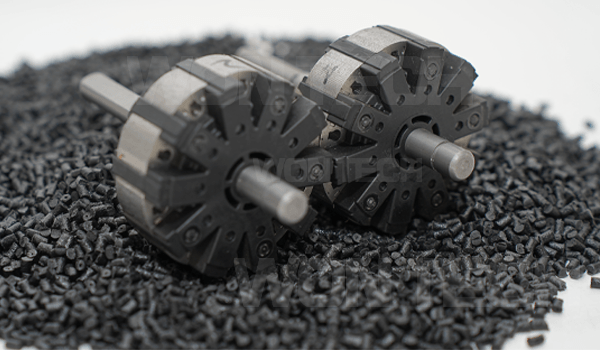
Customized Mold Solutions For Specialty Plastics
1. Mold Design Prioritizing Thermal Management
BMC characteristics: high-temperature curing exothermic reaction, heat dissipation requirements of end products, and sensitivity to heat distortion.
BMC material undergoes an exothermic curing reaction at 150-180°C, releasing a significant amount of heat during its cross-linking process, leading to uneven temperature distribution within the mold cavity.
- BMC curing heat peak distribution is accurately predicted through thermal runner simulation
- Optimized cooling channel topology ensures uniform mold temperature, preventing material degradation caused by localized overheating
- The heat dissipation efficiency of the terminal electric motor components is improved by 15-30%, directly addressing the continuous heat load that the BMC components must withstand during motor operation
- Precise temperature control reduces dimensional drift caused by BMC shrinkage, ensuring assembly accuracy between insulating components and metal assemblies
2. Wear Resistance and High Precision Integration
BMC characteristics: high glass fiber content for abrasion resistance (25-30%), dimensional stability requirements for electrical insulation components, and long-term performance consistency requirements.
The high content of chopped glass fibers in BMC causes severe wear on the mold surface during high-pressure injection molding, which in particular affects the long-term production of precision electric motor components.
- Key areas utilize H13+ modified mold steel (hardness 52-54HRC) with a diamond-like carbon coating to extend mold life
- Micron-level polishing of the gate area (Ra≤0.025μm) reduces glass fiber buildup
- The cavity tolerance control system ensures that the drift of critical dimensions of insulating components (such as slot width and insulation gap) does not exceed 0.005mm after one million cycles
- Ensuring the accuracy of creepage distance in the motor stator insulation system avoids the risk of insulation failure due to mold wear
3. Targeted Exhaust and Sealing System
BMC characteristics: release of volatile components after curing, electrical insulation and cleanliness requirements, flow characteristics of high-viscosity materials.
BMC releases volatile components such as styrene (accounting for 1-3% of the material’s weight) during the high-temperature curing process, while electrical components have extremely high requirements for surface quality and edge precision.
- Multi-stage gradient venting system (depth 0.02-0.04mm), increasing venting rate by 40% and preventing insulation strength reduction caused by air marks
- Laser microstructure sealing technology on the mold closing surface controls overflow under high molding pressure of BMC
- 0.01mm-level mold closing clearance control ensures flash thickness <0.03mm, meeting the cleanliness requirements of motor insulation components and preventing metal-insulation interface contamination
- A special coating in the venting area resists corrosion from BMC decomposition products, extends mold maintenance cycles, and ensures consistent quality in the long-term production of motor insulation components
Consistent Process Knowledge and Process Control
- BMC electric motor components dedicated process window: Optimizes injection speed and pressure profiles to control fiber orientation and optimize part mechanics. Precisely controls curing time to balance production efficiency and material curing degree.
- Integrated online quality monitoring: Integrates cavity pressure and temperature sensors into mass production molds to monitor process stability for each mold run in real time and perform correlation analysis with critical dimensions to achieve predictive quality control.
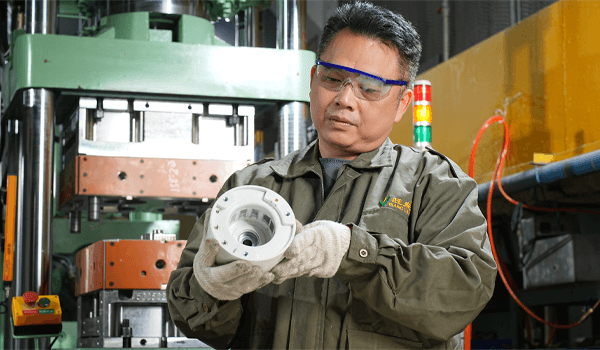
End-to-End Performance Optimization for Electric Motor Components
We have fully integrated our expertise in plastics engineering, precision mold design, and advanced manufacturing capabilities to create a systematic solution that ensures successful implementation and optimal performance in demanding motor applications.The following represent classic solutions utilizing thermosetting plastics—such as BMC—for electric motor components.To find out which solution is right for your product, contact us!
Plastic Selection for Electric Motor Operating Conditions
- Beyond Standard Selection: We customize modified BMC formulations based on your motor operating temperature, cooling method, insulation class, and cost targets, and conduct prototype testing.This includes optimizing thermally conductive fillers and using glass fiber of specific lengths.
- Establishing a Material-Performance Database: We obtain long-term thermal aging, dielectric strength, and mechanical creep data of the selected BMC in simulated motor environments in advance, providing reliable input for your design.
Customized Mold Solutions for BMC Characteristics
1. Mold Design Prioritizing Thermal Management
BMC characteristics: high-temperature curing exothermic reaction, heat dissipation requirements of end products, and sensitivity to heat distortion.
BMC material undergoes an exothermic curing reaction at 150-180°C, releasing a significant amount of heat during its cross-linking process, leading to uneven temperature distribution within the mold cavity.
- BMC curing heat peak distribution is accurately predicted through thermal runner simulation
- Optimized cooling channel topology ensures uniform mold temperature, preventing material degradation caused by localized overheating
- The heat dissipation efficiency of the terminal motor components is improved by 15-30%, directly addressing the continuous heat load that the BMC components must withstand during motor operation
- Precise temperature control reduces dimensional drift caused by BMC shrinkage, ensuring assembly accuracy between insulating components and metal assemblies
2. Wear Resistance and High Precision Integration
BMC characteristics: high glass fiber content for abrasion resistance (25-30%), dimensional stability requirements for electrical insulation components, and long-term performance consistency requirements.
The high content of chopped glass fibers in BMC causes severe wear on the mold surface during high-pressure injection molding, which in particular affects the long-term production of precision electric motor components.
- Key areas utilize H13+ modified mold steel (hardness 52-54HRC) with a diamond-like carbon coating to extend mold life
- Micron-level polishing of the gate area (Ra≤0.025μm) reduces glass fiber buildup
- The cavity tolerance control system ensures that the drift of critical dimensions of insulating components (such as slot width and insulation gap) does not exceed 0.005mm after one million cycles
- Ensuring the accuracy of creepage distance in the motor stator insulation system avoids the risk of insulation failure due to mold wear
3. Targeted Exhaust and Sealing System
BMC characteristics: release of volatile components after curing, electrical insulation and cleanliness requirements, flow characteristics of high-viscosity materials.
BMC releases volatile components such as styrene (accounting for 1-3% of the material’s weight) during the high-temperature curing process, while electrical components have extremely high requirements for surface quality and edge precision.
- Multi-stage gradient venting system (depth 0.02-0.04mm), increasing venting rate by 40% and preventing insulation strength reduction caused by air marks
- Laser microstructure sealing technology on the mold closing surface controls overflow under high molding pressure of BMC
- 0.01mm-level mold closing clearance control ensures flash thickness <0.03mm, meeting the cleanliness requirements of motor insulation components and preventing metal-insulation interface contamination
- A special coating in the venting area resists corrosion from BMC decomposition products, extends mold maintenance cycles, and ensures consistent quality in the long-term production of motor insulation components
Consistent Process Knowledge and Process Control
- BMC electric motor component dedicated process window: Optimizes injection speed and pressure profiles to control fiber orientation and optimize part mechanics. Precisely controls curing time to balance production efficiency and material curing degree.
- Integrated online quality monitoring: Integrates cavity pressure and temperature sensors into mass production molds to monitor process stability for each mold run in real time and perform correlation analysis with critical dimensions to achieve predictive quality control.
The Greatest Technical Value You Can Realize
Optimal Motor Performance
Higher functional density: Significantly increased output power and a 20% reduction in motor size within the same volume (power).
Lower operating temperature rise: After 10,000 hours of continuous operation at 180°C, our BMC insulation system retains over 95% of its mechanical strength, while conventional materials typically drop below 70%.
Superior NVH (Noise, Vibration, and Harshness): perating noise is reduced by 8-12 decibels, vibration amplitude is reduced by 30-45%, reducing connection loosening and component fatigue caused by vibration, and extending the overall lifespan of the machine.
Higher insulation safety level: The insulation class exceeds industry standards, even in harsh environments with 95% humidity and 85°C, the insulation resistance remains above 10^12 Ω.
Total Cost Reduction
High-life mold design. Lifespan can reach 5 million to 10 million cycles, reducing mold maintenance downtime and increasing production capacity.
High yield rate process. Mass production yield rate consistently exceeds 98.5%, directly saving material and labor costs and reducing product quality issues.
BMC’s unique performance makes it possible to mold complex structures in one step, reducing supply chain management complexity by 70% and resulting in annual overall cost savings.
Reduce overall motor manufacturing costs. Lower maintenance frequency, reduced spare parts inventory, and lower overall cost of ownership.For industrial motors that operate 24/7, approximately 800–1,500 per unit can be saved in electricity costs per year.
End-to-end Risk Reduction
Material application risk management. Our established materials database and pre-validation system can identify over 90% of potential risks when considering the application of BMC materials.
Design and manufacturing work together to ensure quality. Through virtual model flow analysis and structural simulation, we can identify more than 85% of potential manufacturing problems at the 3D model stage.
By acquiring a partner with expertise in materials application, mold engineering, and motor industry experience, the application risks of new materials and structures can be significantly reduced.
Rapid Production Cycles
Simultaneous engineering development. From the design phase, materials scientists, motor design engineers, mold experts, and production teams are integrated, reducing modification time from 72 hours to as little as 8 hours.
Rapid trial molding process. A complete virtual-simulation verification system is recommended, which can reduce the verification cycle from the traditional 8-10 weeks to 2-3 weeks.
Mass production assurance. Through pre-set capacity ramp-up milestones and a real-time problem response mechanism, a smooth transition from trial production to full-capacity production is ensured.
Some Successful Application Cases
Our numerous successful application cases amply demonstrate that precisely engineered electric motor components solutions not only meet the most demanding motor usage requirements but also reduce total lifecycle costs by enhancing reliability, thereby delivering a quantifiable return on investment.
Challenge
Traditional insulation materials failed under high temperature and humidity, limiting motor lifespan to 3-4 years and resulting in high warranty costs.
Solution
Implemented a custom BMC formulation, optimized filler ratios and resin systems specifically for air conditioning applications.
Results
- Material cost increased by 8%, but Total Cost of Ownership decreased by 27%
- Motor lifespan extended from 4 years to 10+ years
- Warranty claims reduced by 68%
- Production efficiency improved by 15%
- Dense molecular structure prevents thermal degradation
“ Working with their material experts saved us over $1.2M annually in total production costs while improving product reliability. ” — Director of Engineering, Electrical Supplier
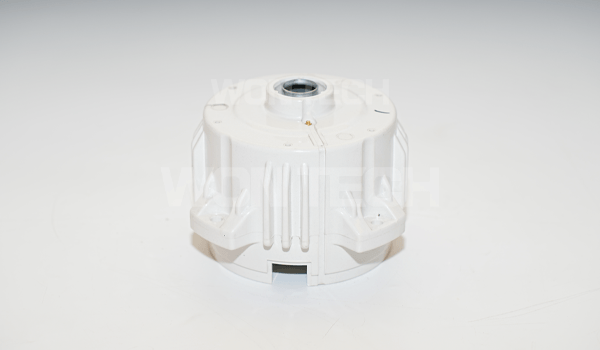
- Key Improvement Points
- High-temp BMC insulation(200C rating)
- Integrated heat dissipation ribs
- Complete moisture sealing, no epoxy potting needed
- ±0.05mm precision molding enables perfect stator-rotor clearance
Some Successful Application Cases
Our numerous successful application cases amply demonstrate that precisely engineered electric motor components solutions not only meet the most demanding motor usage requirements but also reduce total lifecycle costs by enhancing reliability, thereby delivering a quantifiable return on investment.
Challenge
Traditional insulation materials failed under high temperature and humidity, limiting motor lifespan to 3-4 years and resulting in high warranty costs.
Solution
Implemented a custom BMC formulation, optimized filler ratios and resin systems specifically for air conditioning applications.
Results
- Material cost increased by 8%, but Total Cost of Ownership decreased by 27%
- Motor lifespan extended from 4 years to 10+ years
- Warranty claims reduced by 68%
- Production efficiency improved by 15%
- Dense molecular structure prevents thermal degradation
- Key Improvement Points
- High-temp BMC insulation(200C rating)
- Integrated heat dissipation ribs
- Complete moisture sealing, no epoxy potting needed
- ±0.05mm precision molding enables perfect stator-rotor clearance
“ Working with their material experts saved us over $1.2M annually in total production costs while improving product reliability. ” — Director of Engineering, Electrical Supplier
Motor Performance Risk Assessment Guide
By quickly diagnosing potential risks to electric motor plastic components in terms of thermal management, NVH performance, insulation safety, and mass production stability, you can help avoid design pitfalls and optimize product costs in advance. The following is only a basic assessment.
Partner with Us. Engineer Your Success.
- Unit Production Cost Reduced By 15-25%
- Product Time-to-market Shortened By 40%
- Product Failure Rate Reduced By 60%

- No.2, South Huatai East Road, Caosan PioneerPark,ZhongShan,Guangdong,China
- +86 13326981626
- ocean.h@wanglai.cn
CAPABILITIES




Copyright ©2025 Wontech | Powered by Wontech.All Rights Reserved.