
Proven Plastic Bonded Magnets for Advanced Engineering Applications
As motor technology advances towards lightweighting and high efficiency, plastic magnetic (bonded permanent magnet) components play a crucial role. We specialize in plastic bonded magnets injection molding molds, overcoming the challenges of flow and orientation of magnetic powder at high filling rates. Through innovative magnetic circuit simulation and mold design, we precisely control the distribution of the magnetic field within the cavity, meeting numerous demanding application requirements.
What Are Plastic Bonded Magnets?
Plastic bonded magnets are composite materials made by mixing magnetic powders (ferrite, neodymium, or samarium cobalt) with a high-performance polymer matrix (nylon, PPS, PEEK) and shaping them via injection molding or compression molding.This advanced material combines the magnetic properties of traditional magnets with the design flexibility, lightweight, and corrosion resistance of engineering plastics, making it an ideal choice for precision electric motors and sensors.
Key Characteristics and Advantages:
- Flexible In Shapes: Due to the molding,they can form complex shapes,thin-walled rings, and geometries that are difficult to achieve with traditional sintering.
- Precise Dimensions:High-precision tolerances such as 0.05mm are maintained with virtually no post-processing.
- Cost Advantages: Unlike sintered magnets, they are less prone to breaking (chipping) and can be directly assembled into components, reducing secondary processing.
- Thermal stability: The specially formulated compound maintains stable performance over a temperature range of -40°C to +180°C.
- Electrical isolation: The non-conductive nature eliminates eddy current losses in high-frequency applications.
Case Studies
Product Samples
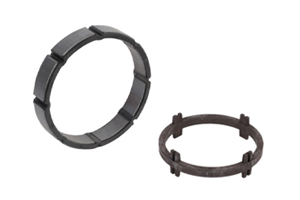
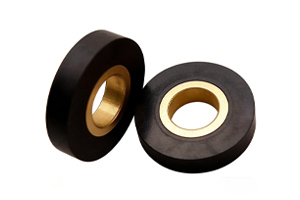
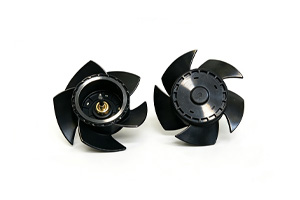
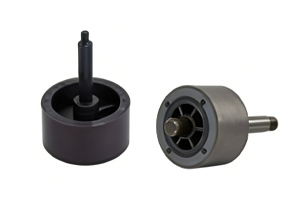
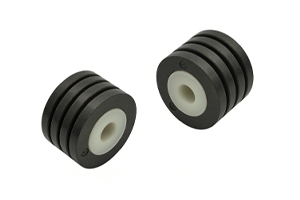
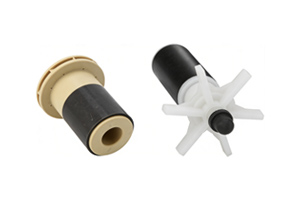
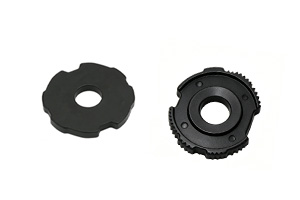
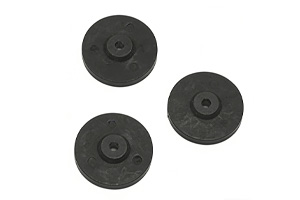
Custom Manufacturing Capabilities from Concept Design to Volume Production
Each plastic bonded magnets solution is designed to meet your mechanical, magnetic, and thermal specifications, enabling end-to-end control from molecular formulation to final validation testing.
Material Science Expertise
- Magnetic Powder Systems: Ferrite (SrFe12O19), Neodymium Iron Boron (N35-N52 grade), Samarium Cobalt (1:5 and 2:17 types).
- Polymer Matrices: Nylon 6/66 (General Purpose), PPS (High Temperature), PEEK (Extreme Environment), LCP (Ultra-Thin Wall Type).
- Specialty Additives: Conductive Fillers, Wear Modifiers, Flame Retardants, Masterbatches.
- Addition Ratio: Magnetic powder addition is 40-65%, which can be optimized according to specific performance requirements.
Precision Manufacturing Processes
- Injection Molding
- Machinery: 50-500 ton hydraulic and electric injection presses.
- Precision: ±0.02mm dimensional control with real-time process monitoring.
- Capacity: 50,000+ shots/day with automated quality inspection.
- Special Features: In-mold magnetization, insert molding, multi-shot molding.
- Compression Molding
- Applications: High-loading ratio components (>60% magnetic material).
- Temperature Range: -50°C to +220°C continuous operation capability.
- Tolerance Control: ±0.03mm achievable for critical dimensions.
Magnetization Technology
- Multi-Pole Patterns: Up to 256 poles on single component,enabling complex magnetic field configurations.
- Orientation Types: Radial, axial, diametric, custom field patterns,meets complex engineering and geometric requirements.
- Field Strength: 20,000+ Oe magnetization capability,ensuring maximum magnetic performance and energy density.
- In-Process Verification: 100% magnetic field mapping with Helmholtz coil testing,guaranteeing magnetic performance meets industry standards.
Quality Testing Capabilities
- Magnetic Analysis: BH tracer, flux meter, gauss meter (±1% accuracy).
- Dimensional Control: CMM (±0.001mm), optical comparators, automated vision systems.
- Environmental Testing: Thermal cycling (-65°C to +200°C), humidity, salt spray, vibration.
- Material Verification: FTIR spectroscopy, DSC thermal analysis, mechanical property testing.
Plastic Bonded Magnets vs. Conventional Solutions
Applications Where Plastic Bonded Magnets Outperform Conventional Solutions
Discover how plastic bonded magnets are revolutionizing component design across industries. In these high-impact applications, switching from traditional magnetic solutions delivers measurable advantages in performance, cost, and manufacturability.
Application:
Automotive EPS systems, electric motor position sensing, transmission sensors
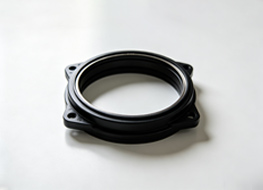
Electric Power Steering (EPS) Sensor Rings
Conventional solutions:Sintered ferrite rings require secondary machining, prone to chipping during assembly, limited to simple geometries.
Plastic bonded magnets solution:Injection molded multi-pole rings with integrated mounting features.
- Reduced costs: 20% total cost reduction (eliminates grinding, coating, assembly steps)
- Improved performance: Tighter tolerances (±0.05mm) improve sensor accuracy by 10%
- Enhanced reliability: No chipping or cracking during high-speed assembly processes
- Design freedom: Complex shapes with integrated mounting tabs reduce component count
Application:
Miniature components such as smartphone cameras,tablet cameras and drone imaging systems
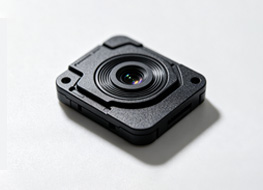
Small Camera Auto-Focus Actuators
Conventional solutions: Metal-cased actuators add weight, create electromagnetic interference, limited miniaturization potential
Ultra-thin plastic bonded magnets ring for voice coil motors.
- Achieve 0.3mm wall thickness impossible with sintered magnets
- 30-40% lighter than metal alternatives, critical for mobile device weight budgets
- Non-conductive polymer matrix eliminates eddy current losses
- 25% lower unit cost at high volumes through automated molding
Application:
Electric vehicle motors, e-bike motors, drone propulsion systems
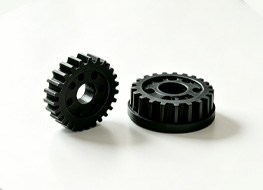
Motor Rotor Assemblies
Conventional solutions: Sintered NdFeB rotors are heavy, brittle, require complex assembly
Plastic bonded magnets solution: Lightweight bonded NdFeB rotors with integrated structural features.
- Weight optimization: 30-40% weight reduction improves power-to-weight ratio
- Inertia reduction: Reduced rotational inertia enables faster acceleration response
- Design integration: Combine magnetic and structural functions in single component
- Cost-effectiveness: 20% lower assembly costs through simplified manufacturing
Application:
Electric vehicle motors, e-bike motors, drone propulsion systems
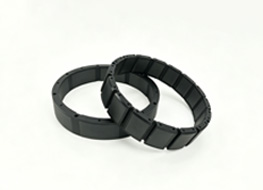
Brushless DC Fan Motor
Traditional BLDC motors use sintered ferrite or NdFeB magnets that are heavy, limited to simple geometries, require complex assembly processes, and generate higher noise levels due to magnetic cogging.
Precision injection molded plastic bonded magnets rotor with optimized flux patterns for smooth operation.
- Reduced noise: Optimized magnetic field distribution and reduced cogging torque
- Increased efficiency 15%:Precise magnetic field control and reduced iron losses
- 35% lighter rotor assembly enables quieter operation and extends bearing life by 2-3x
- Reducing Cost:Net-shape molding,eliminating magnet segmentation and bonding process
Why We Are the Right Partner for You?
Choosing our plastic bonded magnets solution means partnering with a team that combines deep material science knowledge with engineering application expertise, delivering not just components, but complete performance optimization.
Technical Partnership Model
Front-end engineering support involves deep involvement in design optimization from the conceptual stage.
Design Evaluation
DFM analysis provides a manufacturability assessment report, evaluates the magnetic circuit design, and identifies potential risks.
Virtual Prototyping
Magnetic circuit simulation using ANSYS Maxwell optimizes magnetic field distribution and performance parameters.
Material Guidance
Performance and cost optimization based on your specific requirements.
Joint Development
After signing the NDA, databases and process parameters are shared, initiating a rapid prototyping cycle to validate the concept before mold trial and further optimize the solution.
Total Cost Optimization
Performance Guarantee Standard
- Design Integration: Multi-cavity mold technology integrates 3-5 traditional components into a single plastic magnetic part, reducing assembly time and costs.
- Process Efficiency: Automated production lines achieve 98% material utilization (vs. 75% for traditional solutions), reducing waste by 20-30%.
- Supply Chain Optimization:In-house raw material reserves mitigate market volatility risks.
- Lifecycle Cost Reduction: Reliability design reduces on-site maintenance costs for customers and extends product lifespan.
- Precision Manufacturing:±0.03mm dimensional tolerance (industry standard ±0.1mm), magnetic performance consistency ±3% (industry standard ±8%).
- Reliability Standards: 10,000+ hours of continuous operation verification, performance degradation <5% within a temperature range of -40°C to +180°C.
- Quality Assurance: 100% inspection of magnetic performance parameters, SPC process control, PPM defect rate <80.
- Delivery Commitment: 99.2% on-time delivery rate, 72-hour rapid response for urgent orders.
Total Cost Optimization
- Design Integration: Multi-cavity mold technology integrates 3-5 traditional components into a single plastic magnetic part, reducing assembly time and costs.
- Process Efficiency: Automated production lines achieve 98% material utilization (vs. 75% for traditional solutions), reducing waste by 20-30%.
- Supply Chain Optimization:In-house raw material reserves mitigate market volatility risks.
- Lifecycle Cost Reduction: Reliability design reduces on-site maintenance costs for customers and extends product lifespan.
Performance Guarantee Standard
- Precision Manufacturing:±0.03mm dimensional tolerance (industry standard ±0.1mm), magnetic performance consistency ±3% (industry standard ±8%).
- Reliability Standards: 10,000+ hours of continuous operation verification, performance degradation <5% within a temperature range of -40°C to +180°C.
- Quality Assurance: 100% inspection of magnetic performance parameters, SPC process control, PPM defect rate <80.
- Delivery Commitment: 99.2% on-time delivery rate, 72-hour rapid response for urgent orders.
Advanced Material Science Capabilities
- Custom Formulations:Standard formula library + unlimited customization capabilities, with magnetic powder content precisely controlled within the 40-65% range.
- High-Performance Polymers: Proprietary PPS/PEEK composite system, temperature resistance up to 220°C (standard nylon only 120°C).
- Specialized Additives: Integrated thermally conductive, wear-resistant, and flame-retardant additives, requiring no secondary processing.
- Material Testing: Supports 200+ material performance tests, including accelerated aging, chemical compatibility, and mechanical strength.
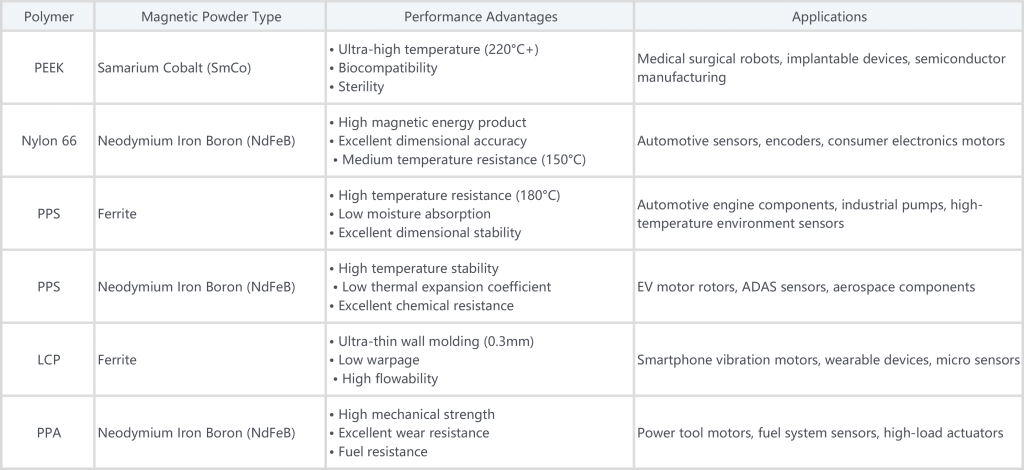
|
Polymer
|
Magnetic Powder Type
|
Performance Advantages
|
Applications
|
|---|---|---|---|
|
PEEK
|
Samarium Cobalt (SmCo)
|
• Ultra-high temperature (220°C+) • Biocompatibility • Sterility
|
Medical surgical robots, implantable devices, semiconductor manufacturing
|
|
Nylon 66
|
Neodymium Iron Boron (NdFeB)
|
• High magnetic energy product • Excellent dimensional accuracy • Medium temperature resistance (150°C)
|
Automotive sensors, encoders, consumer electronics motors
|
|
PPS
|
Ferrite
|
• High temperature resistance (180°C) • Low moisture absorption • Excellent dimensional stability
|
Automotive engine components, industrial pumps, high-temperature environment sensors
|
|
PPS
|
Neodymium Iron Boron (NdFeB)
|
• High temperature stability • Low thermal expansion coefficient • Excellent chemical resistance
|
EV motor rotors, ADAS sensors, aerospace components
|
|
LCP
|
Ferrite
|
• Ultra-thin wall molding (0.3mm) • Low warpage • High flowability
|
Smartphone vibration motors, wearable devices, micro sensors
|
|
PPA
|
Neodymium Iron Boron (NdFeB)
|
• High mechanical strength • Excellent wear resistance • Fuel resistance
|
Power tool motors, fuel system sensors, high-load actuators
|
Special Functional Enhancement Options
Thermal Conductive Enhancement: +5-10% boron nitride/alumina fillers, thermal conductivity increased by 300%, suitable for high-power density motors.
Wear Resistance Enhancement: +3-5% PTFE/carbon fiber, wear rate reduced by 80%, suitable for rotary seals and high-friction environments.
Flame Retardant Safety: UL94 V-0 grade certification, halogen-free flame retardants, suitable for consumer electronics and transportation.
EMI Shielding: Integrated conductive fillers, surface resistance 10³-10⁶Ω, suitable for EMI-sensitive applications.
Medical Grade: ISO 10993/USP Class VI certification, non-cytotoxic, suitable for medical devices and implants.
Special Functional Enhancement Options
Thermal Conductive Enhancement: +5-10% boron nitride/alumina fillers, thermal conductivity increased by 300%, suitable for high-power density motors.
Wear Resistance Enhancement: +3-5% PTFE/carbon fiber, wear rate reduced by 80%, suitable for rotary seals and high-friction environments.
Flame Retardant Safety: UL94 V-0 grade certification, halogen-free flame retardants, suitable for consumer electronics and transportation.
EMI Shielding: Integrated conductive fillers, surface resistance 10³-10⁶Ω, suitable for EMI-sensitive applications.
Medical Grade: ISO 10993/USP Class VI certification, non-cytotoxic, suitable for medical devices and implants.
Unsure which material is best suited for your application?
Want access to a complete database of material formulations?
Step 1: Environmental Assessment
Temperature Range, Chemical Exposure, Mechanical Load
Step 2: Performance Requirements
Magnetic Field Strength, Dimensional Accuracy, Lifespan Requirements
Material Selection Process
Step 4: Certification Requirements
Industry Standards, Safety Regulations, Environmental Compliance
Step 3: Cost Analysis
High volume Production Scale, Total Cost of Ownership (TCO) Optimization
Material Selection Process
Step 1: Environmental Assessment
Temperature Range, Chemical Exposure, Mechanical Load
Step 2: Performance Requirements
Magnetic Field Strength, Dimensional Accuracy, Lifespan Requirements
Step 4: Certification Requirements
Industry Standards, Safety Regulations, Environmental Compliance
Step 3: Cost Analysis
High volume Production Scale, Total Cost of Ownership (TCO) Optimization
Engineered Solutions Specifically for Your Application
To address your current design challenges, we offer optimized plastic bonded magnets solution to find your perfect match.These solutions can be tailored to your specific application needs, ensuring optimal performance, cost-effectiveness, and seamless integration with your product ecosystem.
Partner with Us. Engineer Your Success.
- Download Our Complete Application Guide
- Get Your Free Application Assessment
- Schedule a Engineering Consultation

- No.2, South Huatai East Road, Caosan PioneerPark,ZhongShan,Guangdong,China
- +86 13326981626
- ocean.h@wanglai.cn
CAPABILITIES




Copyright ©2025 Wontech | Powered by Wontech.All Rights Reserved.