
Home/About/News/Innovative Technologies In Drones
Innovative Technologies In Drones
The drone industry is developing towards intelligence, specialization, and extreme performance, which directly drives its core components toward higher integration, greater lightweighting, and more reliable precision manufacturing.
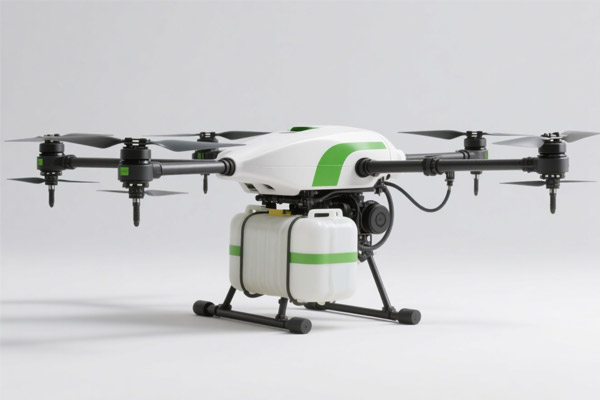
Drones are entering countless industries: from agricultural plant protection to urban logistics, from emergency rescue to creative aerial photography. However, behind this prosperity, “range anxiety” remains a persistent concern—slow breakthroughs in battery technology mean that every gram of weight affects flight time. Manufacturers are caught in a dilemma: metal components are sturdy but “hold back,” while ordinary plastics are lightweight but cannot withstand the challenges of high altitudes, low temperatures, and vibrations. Lightweighting is not just about reducing weight; it’s a comprehensive test of material intelligence, mold precision, and safety boundaries.
Challenge
In early 2025, we received a collaboration invitation from a leading industrial drone manufacturer. They needed a brand-new motor housing with the goal of reducing weight by more than 20% compared to traditional aluminum housings without sacrificing strength, and significantly reducing operating noise.

Our Solution
1. Material Selection and Inspection
In-depth Testing: Comparing 7 engineering plastics, we ultimately selected PA66 + 30% CF(Carbon Fiber Reinforced Nylon).
Key Verifications
- -30℃ Low Temperature Impact Test: Ordinary plastics shattered, while our sample only left shallow marks
- Simulated 5000-meter High-Altitude Low-Pressure Environment: 72-hour cycle test, dimensional change <0.1%
- On-site "Hammer Impact Test" conducted by customer engineers
2. Process Optimization and Fine-tuning
Principle Visualization: Injecting a small amount of nitrogen gas to form uniform micron-sized bubbles (≈1/10 the thickness of a human hair), dispersing stress like a honeycomb.
Millimeter-Level Control
- Mold flow analysis software was used for 3 pre-runs to avoid areas prone to bubble aggregation
- Continuous 72-hour monitoring at the injection molding machine: Samples were taken every 2 hours, and bubble distribution was examined under a microscope
- The density was ultimately precisely controlled at 0.98 g/cm³ (slightly lighter than water), and CT scans confirmed a uniform internal structure
3. Innovative Structural Design
Pain Point Solving: The original design required assembling three parts, and accumulated errors in the screw holes often led to shaking and abnormal noise.
Mold Ingenuity
- Adopting a slider + angled ejector composite mechanism: Complex undercuts automatically separate upon mold opening, allowing the part to be completely removed.
- Adding invisible reinforcing ribs to stress areas; non-critical areas are as thin as 1.2 mm
- Repeatedly adjusting the snap-fit force
Results
- Overall weight reduction of 22%: Material innovation + microfoaming + structural optimization
- Actual flight range improvement of 18%: 15 minutes more flight time per charge
- Extreme environment testing passed: -20℃ to 60℃ high and low temperature cycling, 5000-meter high-altitude simulation test with zero defects
- Operating noise reduced by 5 decibels, quieter and more environmentally friendly
RECENT POSTS
Green Breakthrough in Motor End Caps for New Energy Vehicles
December 5, 2025
Integrated Design of Intelligent Robotic Vacuum Ceaners
Octorber 12, 2025
Have A New Project?
Click to learn more project tips to help you start your project faster.
- Mold Steel Material Selection Guide
- Mold Quality Standard Manual
- Injection Molding Plastic Materials Brochure
- Injection Mold Customization Guide
- Chemically Resistant Materials Document
- Comparison of Various Processes in Injection Molding
- Parts Quality Standard Manual
- Beginner’s Guide to Injection Molding
- Beginner’s Guide to Mold Customization
- Optimal Design of Hot Runner Molds
- Selection of Hot Runner and Cold Runner
CATEGORIES
- Cases and News
- Tips and Guides
- Knowledge Sharing
- Latest Industry News
Customize Your Product

- No.2, South Huatai East Road, Caosan PioneerPark,ZhongShan,Guangdong,China
- +86 13326981626
- ocean.h@wanglai.cn
CAPABILITIES




Copyright ©2025 Wontech | Powered by Wontech.All Rights Reserved.