
Home / Plastic Raw Material Manufacturing
Plastic Raw Material Manufacturing Services
We not only manufacture plastic parts, but also the plastic raw material needed to make them. From standard resins to modified engineering plastics and masterbatches, to custom compounds, we have consistently delivered reliable quality for 10 years—whether your order is 1 ton or 100 tons.
What Are Plastic Raw Material?
Plastic raw material are the basic materials used to manufacture various plastic products; they are in their “raw material state” before being processed into final products. They are usually not a single substance, but rather a combination.
The core component is synthetic resin, accounting for 40%-100% by weight, and determines the basic properties of the plastic. Synthetic resin is a man-made high-molecular polymer, mainly derived from petroleum, natural gas, and coal.In industry, it is commonly found in granules or powders, which are the most common forms of trade and transportation for plastic raw material.
Pure resin often has limited properties, so plastic raw material are usually mixtures of resin with various additives. Common additives include plasticizers, stabilizers, fillers, masterbatches, flame retardants, antistatic agents, and foaming agents.
Common types of plastic raw material include:
- Thermoplastics: PE/PC/PVC/PS/PET/ABS/PCS/PA
- Thermosetting Plastics:Phenolic resin/Epoxy resin/Polyurethane/BMC/SMC

Our Professional Plastic Raw Material Manufacturing Services
From basic general-purpose materials to customized modifications, and then to appearance, function, and extreme operating conditions, the 4 types of plastic raw material services we offer together constitute our product capabilities that cover all performance requirements.
Basic Plastic Raw Material
Polyolefin Series: PP, PE , HDPE, LDPE
Engineering Plastic: ABS, PC, PA6/PA66, POM
Specialty Plastic Series: PBT, PMMA, TPU
We have established a rigorous testing process: melt flow index testing, density measurement, and visual inspection to ensure compliance with industry quality standards.In addition, we offer customized formulation services. For packaging, we can meet customers’ special needs such as moisture-proof aluminum foil bags and anti-static packaging.
Modified Plastics
Glass fiber reinforcement, flame retardant (halogen-free), impact modification, UV stabilization, mineral filling ,oxygenation, antistatic and conductive compounds
Employing a twin-screw extrusion production line equipped with a high-precision loss-in-weight feeding system, the additive proportioning error is controlled within ±0.5%. Before leaving the factory, it undergoes rigorous performance testing: tensile strength, flexural modulus, impact strength, heat distortion temperature, flame retardancy rating, etc.
Color Masterbatch
Custom color matching (ΔE < 0.5), formulated on carrier resins that match your process — injection molding, extrusion, blow molding. Functional masterbatch also available: anti-block, slip, UV, anti-static
The masterbatch undergoes rigorous process control, including laboratory color matching, small-scale testing, pilot production, and final inspection. Each batch is tested for color difference using a spectrophotometer to ensure color accuracy and batch stability.
Polymer Composite Materials
Short fiber reinforced composites, long fiber reinforced composites, nanocomposite materials, bio-based composite materials
Through precise molecular-level design and advanced processes, high-performance reinforcements such as carbon fiber and nanomaterials are perfectly integrated with the plastic matrix, providing breakthroughs in strength, lightweighting, and resistance to extreme environments that traditional materials cannot overcome in specialized fields.
Our Manufacturing Capabilities & Quality Assurance
Behind every batch of plastic raw materials, compounds, or masterbatches lies a production line and a testing laboratory, which ensure product consistency.
Production Equipment Capabilities
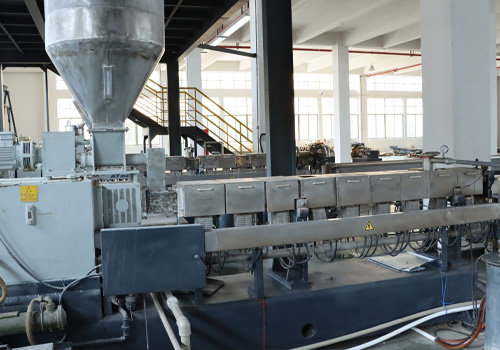
Twin-screw extrusion systems: We are equipped with twin-screw extrusion production lines with screw diameters ranging from 30mm to 65mm.
- Modular screw design, allowing for adjustments and combinations to suit different formulations
- High-torque motors, ensuring stable production of high-filler formulations
- Vacuum exhaust system, effectively removing moisture and volatiles
- Melting gear pumps, ensuring stable extrusion pressure and improving product uniformity
Single-screw granulation systems: Single-screw production lines are primarily used for the modification and granulation of basic raw materials.
Laboratory Testing Equipment
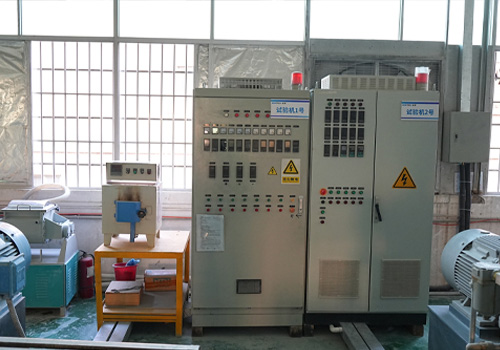
We are equipped with advanced testing equipment to ensure that every batch of materials undergoes rigorous quality verification, from physical properties to safety standards, guaranteeing product reliability from the source.
- Universal Testing Machine: tests tensile, bending, and compressive properties
- Simply Supported Beam/Cantilever Beam Impact Testing Machine: evaluates material toughness
- Melt Flow Indexer: monitors material flowability
- Spectrophotometer: accurately measures color
- Heat Deflection Vicat Softening Point Tester:evaluates heat resistance
- Glow Wire Tester:Tests the safety of flame-retardant materials
Quality Control System
Incoming Material Control
For each batch of base resin, we carefully inspect its appearance, packaging, and performance, checking for impurities, discoloration, integrity, melt flow index, density, etc. For additives, original manufacturer testing reports are required, and we will conduct re-inspections.
Process Control
Key process parameters are recorded every 2 hours: temperature, pressure, rotation speed, and feed rate.
Melt flow index is tested every 4 hours to ensure batch consistency.
An online monitoring system monitors extrusion pressure fluctuations in real time, automatically alarming in case of abnormalities.
Workshop Environmental Control: Temperature 25±2℃, humidity <60% to prevent raw materials from absorbing moisture.
Outgoing Inspection
Each batch of products must be tested for: melt flow index, density, tensile strength, impact strength, and color value. Additional tests for flame-retardant materials: UL94 flame retardant rating, glow wire ignition temperature.
Additional tests for food contact materials: migration and heavy metal content.
Each batch of products comes with a detailed quality inspection report, including the actual measured values of all key parameters.
Quality Traceability
We have established a complete batch traceability system. When customers report quality issues, we can access all production records for that batch within 30 minutes: raw material information, process parameters, testing data, and operator details. This transparency allows us to quickly pinpoint the root cause of the problem, rather than simply shifting blame.
Why Work With Us?
Unlike traditional material suppliers, we possess three core capabilities: material research and development, mold manufacturing, and injection molding. This means that when you choose us, you gain not just a supplier, but a partner who truly understands the entire product lifecycle.
Cost Savings from The Mold Design Stage
Because we are involved in material selection, mold design and manufacturing, and molding, we can identify cost-saving opportunities early on. Sometimes, small changes in material flow or wall thickness in the mold can significantly shorten cycle times and reduce material waste. The cost savings are not only reflected in the price of plastic raw material but also in the total cost of the finished parts.
Cost-Benefit Optimization Analysis
Effects of Common Optimization Solutions
THE WRONG APPROACH
"Lowest material cost"
- High scrap rates
- Frequent failures
- Warranty losses
- Short product life
TOTAL COST: $8.72 per unit
VS.
OUR OPTIMIZED APPROACH
"Optimized total cost"
- 9% higher material cost
- 40% lower scrap rate
- 5-year reliability
- Lower energy use
TOTAL COST: $5.16 per unit
Cost
Optimized Solutions
Material Utilization
Hot runner and optimized gate Design: 5-8% Scrap Rate
Energy Costs
Optimized material processing: 250°C, energy consumption: 0.85 kWh/kg
Mold Life
Optimized steel + surface treatment: 1,200,000 cycles,maintenance frequency: every 300,000 cycles
Scrap rate
After material, mold and process optimization: 0.8-1.2%
Cycle Time
High thermal conductivity mold steel and optimized cooling water circuit: 32s (Cooling time reduced to 18s)
Professional Plastic Alternatives for Your Products
We don't simply offer you a quote for standard plastics. We analyze the actual needs of your parts—including mechanical properties, thermal properties, and appearance—and then recommend materials that meet these requirements at a reasonable price. This often means replacing oversized engineering plastics with modified plastics that perform equally well, or finding a plastic alternative to replace your current metal or rubber components.
Plastic Raw Material Substitution Levels
Level 1: Direct Substitution (Belongs to the same chemical family, no recertification required)
Level 2: Functional Substitution (Different chemical families, same key properties, requires partial testing)
Level 3: System-Level Substitution (Requires design modifications and supply chain solutions)
Plastic Raw Material Substitution Levels
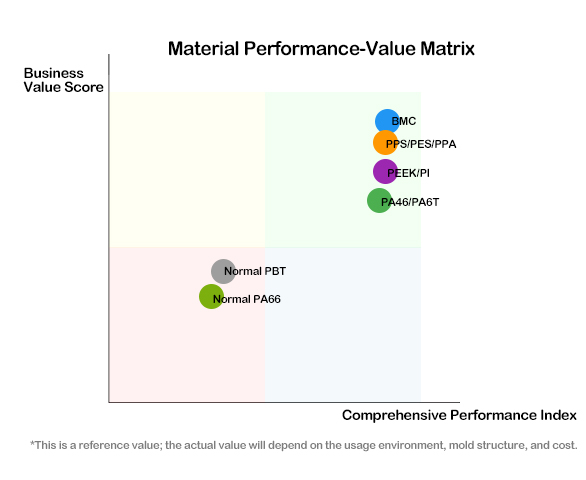
Search and Matching Mechanism
Multi-Parameter Screening (Temperature, Strength, Electrical Properties, Cost)
Performance Gap Visualization (Percentage Difference)
Global/Regional Materials Strategies
Lower Risk from Material Testing to Stable Production
We provide support in prototyping, mold trial, and material certification. As your project scales, there's no need to re-explain your needs to new partners. This continuity reduces the time and costs typically wasted when changing suppliers during the R&D and production phases.
Plastic Raw Material Testing & Validation
| Testing & Verification | Specific Items | |
|---|---|---|
| Material Physical Performance Testing | Failure Mode Analysis | Common material failure modes and prevention methods |
| Batch Consistency Verification | Testing methods to ensure stable performance of materials in long-term supply | |
| Accelerated Aging Model | Scientific methods for predicting 10-15 year service life | |
| Thermal Performance & Weather Resistance Testing | Thermal Management Challenges Solutions | Balancing Heat Dissipation and Insulation in High Power Density Motors |
| Extreme Temperature Cycling Tests | Data from Repeated Cycling Tests from -40°C to +200°C | |
| Thermal Aging Prediction Model | Application of the Model in Material Life Prediction | |
| Combined Effects of Humidity & Electric Field | Performance Changes of Insulation Materials in Humid Environments | |
| Mechanical Strength Analysis | Vibration Fatigue Analysis | Predicting Material Fatigue Life of Components under Vibration Environments |
| Centrifugal Force Testing | Predicting Material Fatigue Life of Components under Vibration Environments | |
| Creep & Stress Relaxation | Dimensional Stability of Materials under Long-Term Loads | |
| Impact & Toughness Balance | Impact Reinforcement Schemes for Brittle Materials (BMC) | |
How To Choose The Right Plastic For your Parts?
Finding the right materials for your parts is a complex, multi-dimensional challenge. It goes well beyond consulting a material data sheet and requires a deep understanding of the product’s real-world environment, mechanical stresses, chemical exposures and economics of scale production, and let us guide you.
Download Plastic Raw Material Application Guide
Plastic Material Requirements for Different Industries
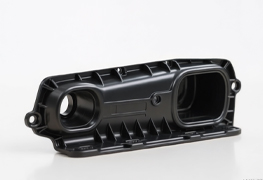
Automotive Industry
Core Requirements: High temperature resistance (150°C+), oil resistance, flame retardancy (UL94 V-0), dimensional stability over a wide temperature range
Key Standards: USCAR-2, ISO 16750, GMW3172, VW 80101
Recommended Materials: PPS, PEEK, Specially formulated PA66
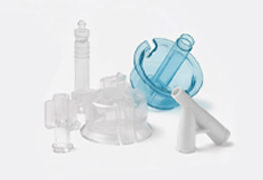
Medical Devices
Core Requirements: ISO 10993 biocompatibility, sterilizability (high-pressure steam/gamma rays), no additive leaching
Key Standards: USP Class VI, FDA CFR 21, ISO 13485
Recommended Materials: Medical-grade POM, PEEK, Transparent PC
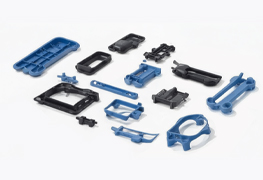
Consumer Electronics
Core Requirements: Thin-walled flowability (≤0.6mm), surface quality, electromagnetic shielding, flame retardancy
Key Standards: UL 94 V-0/V-2, IEC 60601, RoHS
Recommended Materials: LCP, High-Flow PC/ABS, Flame-Retardant PBT
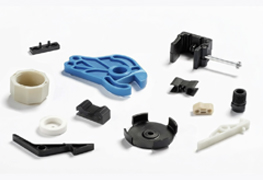
Industrial Equipment
Core Requirements: 20+ Year Service Life, Abrasion Resistance, Chemical Resistance, Mechanical Strength Retention
Key Standards: IEC 60216, NEMA LI-1, ASTM D638/D790
Recommended Materials: Reinforced PPS, PEEK, Special BMC
Recommended Plastic Materials for Harsh Environments
Extreme Temperature Environments
Challenges: Temperature cycling from -50°C to +180°C, thermal shock, low-temperature brittleness
Solutions: Low-temperature modified PPS (non-cracking at -60°C), high-temperature PEEK (continuous use at +250°C), special BMC formulations
Validation Standards: ASTM D648 HDT, IEC 60068-2-14 temperature cycling test
High Humidity & Chemical Exposure
Challenges: Hydrolysis due to high temperature and humidity, chemical solvent corrosion, and decreased insulation performance
Solutions: Hydrolysis-resistant PBT, PPS, cross-linked BMC, hydrophobic surface treatment
Validation Standards: 85°C 1000-hour test, IEC 60093 surface resistivity test
High Electrical Stress Environment
Challenges: Challenges: High voltage (>600V), high-frequency switching, corona discharge, partial discharge
Solutions: High CTI value BMC (600V+), corona-resistant PI film, special filler reinforcement
Validation Standards: IEC 60587 Tracking test, ASTM D2303 Arc resistance
Mechanical Stress & Vibration
Challenges: Mechanical Stress and Vibration
Solutions: High-rigidity PPS+40%GF, PEEK+CF, reinforced BMC
Validation Standards: ISO 16770 Vibration fatigue test, ASTM D2990 Creep test
Case Studies Of Plastic Raw Material Optimization Solutions
Material selection determines the final performance limits, reliability and cost of the part. Theoretical data sheets cannot fully reveal how a material will perform under actual molding and loading conditions.
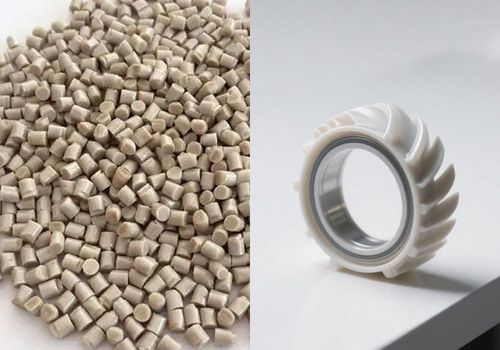
PEEK
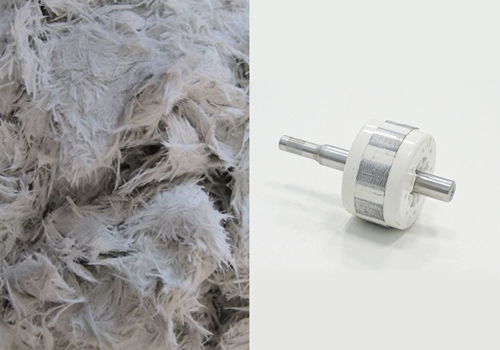
BMC
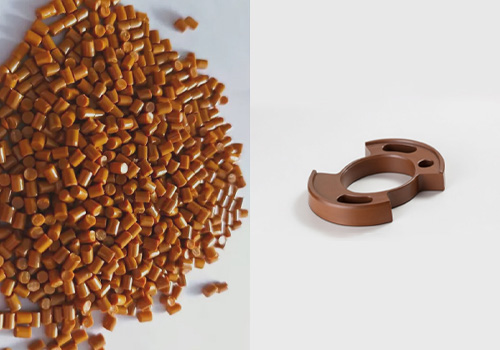
PI
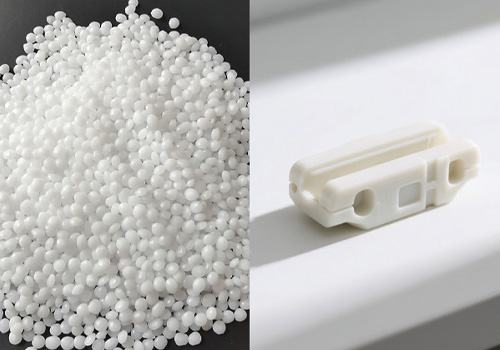
POM
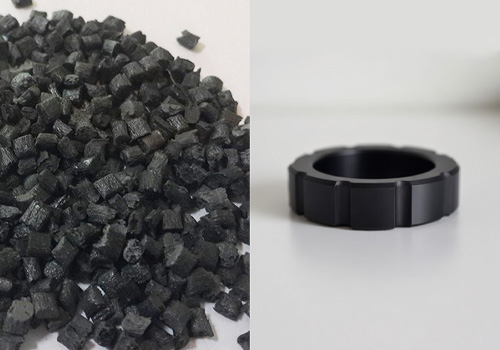
PPS
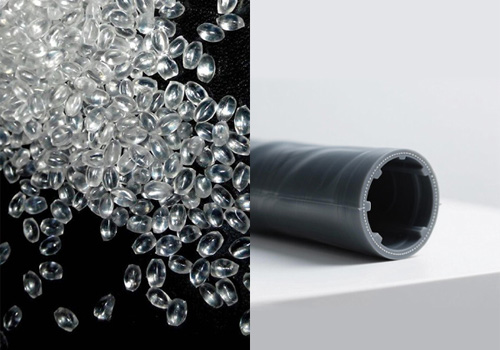
TPU
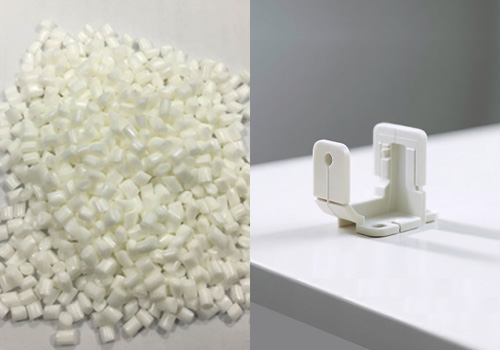
PBT
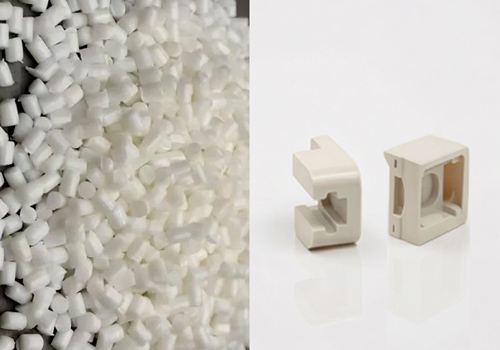
PA6
FAQs For Plastic Raw Material Manufacturing
Quick answers to common questions
“For a part requiring high heat and flame resistance, how do I choose between PPS, PBT, and PA66? Where is the cost-performance balance?”
The choice depends on your specific temperature rating, structural load, and cost budget. It’s a classic performance-cost balance decision.
PPS
- Temperature Resistance:Highest (200-240°C)
- Flame Retardancy (UL94):Excellent(V-0)
- Strength:Highest
- Cost:Highest
PBT
- Temperature Resistance:Medium (120-140°C)
- Flame Retardancy (UL94):Good (V-0, usually requires modification)
- Strength:Good
- Cost:Medium
PA66
- Temperature Resistance:Medium (80-120°C)
- Flame Retardancy (UL94):Fair (V-2/V-0, requires modification)
- Strength:Good(decreases after wetting)
- Cost:Lowest
Decision Recommendations:
- Step 1: Determine the maximum operating temperature. If consistently >150°C, PPS is the only reliable choice.
- Step 2: Within the <150°C range, if high dimensional stability and low moisture absorption are required, choose PBT; if higher toughness, fatigue resistance, and controllable ambient humidity are required, PA66 can be selected.
- Step 3: Consider the total cost of ownership. PA66 has a lower unit price, but may require more complex designs to compensate for its moisture absorption; PBT offers a better balance between stability and cost.
“How do you ensure color consistency across different batches?”
Our color control system comprises four key components:
- Precise Testing Equipment:We use a Datacolor 800 spectrophotometer with an accuracy of 0.01ΔE, far exceeding the industry standard of 0.1ΔE. This means we can detect minute differences virtually imperceptible to the human eye.
- Strict Formula Management:Each customer and each color has an independent formula file, including: pigment brand, specific model, precise proportions, processing temperature, mixing time, etc.
- Standard Sample Library:For colors confirmed by customers, we create standard samples and store them in a temperature- and humidity-controlled sample room. Each new batch is compared with the standard sample to ensure no visible difference and an instrument-measured ΔE < 0.5.
- Production Process Control:Dispersion is the most common issue in masterbatch production. We employ a three-stage mixing process: premixing → main mixing → fine mixing, ensuring complete pigment dispersion. Each batch undergoes an 8-hour aging test to observe color stability.
"My part is currently CNC machined in small volumes. At what production quantity does switching to injection molding become cost-effective? How is the break-even point calculated?"
The break-even point typically occurs between 500 and 5,000 units per year, depending on the complexity and size of the parts.
Calculation Method and Example:
Calculate the total cost of CNC machining: (CNC machining cost per unit + Material cost) × Total demand
Calculate the total cost of injection molding: Mold cost + (Material cost per unit × Total demand)
Equalize these two to calculate the production volume.
Simplified Formula:
Break-even production volume = Total mold investment / (CNC unit cost – Injection unit cost)
Case Assumption:A medium-sized plastic shell.
CNC unit cost: ¥150
Injection unit cost: ¥15
Mold investment: ¥80,000
Calculation:
80,000 / (150 – 15) ≈ 593 units
Conclusion: When demand exceeds approximately 600 units, the total cost of injection molding will be lower.
Furthermore, beyond this point, you will also gain the speed, consistency, and surface quality advantages of injection molding. We can perform a precise analysis based on your specific part drawings.
“To reduce costs, I'm considering replacing imported POM or PBT with domestically produced materials. What are the risks? What verifications need to be redone?”
The primary risk lies in batch consistency and long-term reliability, rather than initial performance. However, through system validation, the risk is manageable.
Required Validation Steps (Risk Control Process):
1.Basic Property Benchmarking:Compare density, melt index, tensile/flexural strength, etc., to ensure datasheet consistency.
2.Key Application Performance Testing:
Electrical Components: Test CTI (tracking index) and flame retardancy.
Structural Components: Test impact strength (especially at low temperatures) and fatigue resistance.
Weathering Components: Conduct thermal aging tests.
3.Process Window Validation:Test on your production equipment to confirm compatibility of processing temperature, flowability, and crystallization rate with existing processes.
4.Small Batch Pilot Production and Assembly Testing:Produce 500-1,000 units for full-size inspection and assembly validation.
5.Long-Term Reliability Assessment:** Conduct accelerated aging tests (e.g., high temperature and humidity tests) based on application requirements.
Our professional support: We have a pre-validated database of domestically produced materials and accelerated testing protocols, which can shorten the above validation cycle from months to weeks, and provide you with detailed comparative test reports, so that your alternative decisions are based on data rather than guesswork.
“I have a part with complex internal structures. Can it be achieved with conventional molding, or does it require special mold techniques or materials like LCP?”
This depends entirely on the structural details. Many “complex” structures can be achieved through clever mold design, but some require special processes or materials.
Solution Layers:
Level 1: Optimizing Mold Design
Slider/Ejector: Solves external undercuts.
Internal Thread Inserts: Solves internal thread demolding.
Air-Assisted/Water-Assisted Molding: Creates thick-walled hollow channels, saving material and avoiding shrinkage marks.
Level 2: Using High-Performance Materials
Ultra-High Flow Materials: Such as LCP, can fill extremely thin (0.15mm) wall thicknesses and microstructures.
Two-Color Injection Molding of Soft and Hard Rubbers: Achieves one-piece seals and non-slip grips.
Level 3: Special Processes
Melting Injection: Used to create one-piece, draft-free complex internal channels (such as automotive engine intake manifolds).
Metal Powder Injection Molding (MIM): Used for miniature, high-precision complex metal structures.
Our Recommendation: Please provide us with your 3D drawings for a free “Manufacturability Analysis”. Our engineers will provide an evaluation report within 48 hours, clearly outlining:
1) How to achieve this through mold design;
2) Recommended materials and processes;
3) Estimated costs and risks.
This ensures your design achieves the optimal balance between creativity and manufacturability.
“How do we balance material cost with product lifetime? Premium materials are too expensive, while standard materials don't meet our performance requirements.”
We focus on Total Cost of Ownership (TCO) rather than upfront material cost. Our comprehensive TCO analysis includes: material cost per part, processing efficiency, field failure rates, warranty costs, end-of-life considerations, and supply chain risk factors. We employ a value engineering methodology that identifies which performance characteristics are truly critical for your specific application versus those where cost optimization is possible without compromising reliability.
For example, in a recent automotive cooling fan project, switching from standard PBT to our modified PPS increased material cost by 18%, but reduced processing cycle time by 22% and extended service life by 3.5x. This resulted in 31% lower total cost over the product’s lifecycle. In another industrial motor application, our material science team developed a proprietary glass/mineral hybrid filled nylon that delivered 90% of premium PPS performance at just 65% of the cost, with validated performance at 150°C continuous operation.
We’ve developed a decision matrix tool that identifies the optimal material based on your specific performance thresholds, production volume, warranty requirements, and market positioning. Our predictive modeling capabilities simulate material degradation under actual operating conditions, allowing us to pinpoint exactly where performance margins can be safely reduced to lower costs. Typically, clients discover that the “sweet spot” isn’t the cheapest or most expensive material, but one that precisely matches their critical performance requirements while allowing strategic cost reduction in non-critical areas. This approach has helped our clients achieve an average of 24% reduction in total product costs while simultaneously improving field reliability metrics by 40%.
“How to ensure the material maintains performance stability under long-term high-temperature conditions?”
Ensuring the performance stability of materials under long-term high-temperature environments requires a comprehensive approach, starting with proper material selection and continuing through a rigorous validation process. First, prioritize materials with high relative temperature index (RTI) values certified by UL 746B, as the RTI value indicates the temperature at which a material retains 50% of its critical performance after 60,000–100,000 hours of exposure. For applications operating continuously above 150°C, consider using polymers with high inherent stability, such as PPS, PEEK, PI, or well-formulated BMC compounds using thermally stable fillers and coupling agents.
Accelerated aging testing using the Arrhenius model principle involves thermal aging tests at multiple high temperatures (typically 20–30°C higher than the expected operating temperature), with regular monitoring of critical properties such as tensile strength, impact strength, and electrical insulation resistance. This data can be used to extrapolate performance over many years of real-world use.
Crucially, material evaluation should not be conducted in isolation but rather under simulated operating conditions and within the geometry of actual components, including thermal cycling between minimum and maximum operating temperatures. This can reveal potential failure modes, such as differential thermal expansion stress at material interfaces or filler-matrix separation, which static testing may miss.
For critical applications, in-service monitoring procedures should be established to periodically test field samples and compare them to baseline performance. Collaborate with material suppliers who can provide long-term stability data from real-world applications, rather than relying solely on datasheet values. Finally, appropriate design factors should be incorporated to address the inevitable (though minimized) performance degradation over time. This systematic approach, combining materials science expertise with application-specific validation, ensures reliable product performance throughout its entire lifecycle, even under the most demanding high-temperature conditions.
Material Intelligence for Manufacturing Excellence
- Download Our Complete Materials Database
- Schedule a Custom Test for Your Application
- Request a Material Consultation

- No.2, South Huatai East Road, Caosan PioneerPark,ZhongShan,Guangdong,China
- +86 13326981626
- ocean.h@wanglai.cn
CAPABILITIES
COMPANY




Copyright ©2026 Wontech | Powered by Wontech.All Rights Reserved.