
Compression Molding Service
Compression molding is an ideal process for manufacturing thermosetting plastics, composites, and rubber parts. Compared to injection molding, compression molding offers lower mold costs and supports metal inserts. We provide a end to end service from material selection and mold design to volume production,ensure the rapid production of cost-effective components.
What Is Compression Molding?
Compression molding is a thermosetting plastic molding process that involves placing preheated material into a heated mold cavity, where it is allowed to flow and solidify under pressure and temperature. This process, over a century old, was initially used for phenolic resins processing and is now widely applied in the manufacture of various high-performance composite materials.
Key Characteristics and Advantages:
- Minimal material waste
- Low internal stress
- Precise fiber orientation control
- Products with excellent mechanical properties and dimensional stability
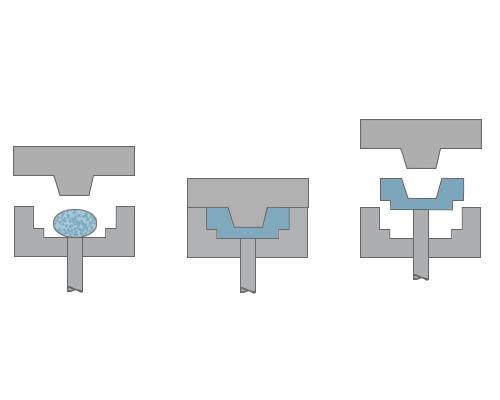
Compression Molding Process
Mold & Material Preparation
Prepare thermoset or composite materials as preforms (or use granules/sheets), and preheat the mold to 150–200°C.
Loading & Clamping
Place the preheated material into the lower cavity, then close the mold by lowering the upper half under 5–30 MPa pressure.
Curing
Maintain the set temperature and pressure for 5–30 minutes to complete cross-linking reaction.
Demolding & Processing
Open the mold, remove the cured part, and perform trimming, drilling, surface finishing, etc.
Compression Molding Tooling Solution
DESIGN & MANUFACTURING
Mold Design & Custom Manufacturing
We offer full-process engineering support from part analysis to mold delivery. Based on the specific requirements of compression molding (and injection molding), we design optimized mold structures including cavity layout, parting lines, heating/cooling channels, and ejection systems. We specialize in cost-effective tooling for high volumes, with flexible mold material options (P20, H13, stainless steel, etc.) to balance durability and investment. Whether for the type of molds, we can match your part complexity and volume targets.
MOLD TRIAL VERIFICATION
Mold Trial & Process Verification
We conduct systematic mold trial and validation. By producing actual parts, we verify mold actions, material flow, curing parameters, and demolding performance. Key process windows such as temperature, pressure, and holding time are recorded and adjusted to eliminate defects like short shots, flash, and voids. After trials, we provide detailed inspection reports and process parameter sheets, ensuring every aspect is stable before production. For compression molding, we pay special attention to insert positioning and thickness consistency.
CUSTOM PLASTIC FABRICATION
Plastic Material Selection & Processing
Material recommendation – Based on mechanical strength, temperature resistance, flame retardancy, insulation, or surface finish, we recommend the most suitable thermosets (BMC/SMC),or thermoplastics (PEEK,etc).
Custom compounding – We offer reinforcement (glass/ carbon fiber), toughening, anti-static, color matching, and other modifications to meet special service conditions.
Material testing – Melt flow index, HDT, UL flammability rating, etc. – to balance performance and cost, especially for high-end applications.
Compression Molding Tooling Solution
DESIGN & MANUFACTURING
MOLD TRIAL VERIFICATION
CUSTOM PLASTIC FABRICATION
Mold Design & Custom Manufacturing
We offer full-process engineering support from part analysis to mold delivery. Based on the specific requirements of compression molding (and injection molding), we design optimized mold structures including cavity layout, parting lines, heating/cooling channels, and ejection systems. We specialize in cost-effective tooling for high volumes, with flexible mold material options (P20, H13, stainless steel, etc.) to balance durability and investment. Whether for the type of molds, we can match your part complexity and volume targets.
Mold Trial & Process Verification
We conduct systematic mold trial and validation. By producing actual parts, we verify mold actions, material flow, curing parameters, and demolding performance. Key process windows such as temperature, pressure, and holding time are recorded and adjusted to eliminate defects like short shots, flash, and voids. After trials, we provide detailed inspection reports and process parameter sheets, ensuring every aspect is stable before production. For compression molding, we pay special attention to insert positioning and thickness consistency.
Plastic Material Selection & Processing
Material recommendation – Based on mechanical strength, temperature resistance, flame retardancy, insulation, or surface finish, we recommend the most suitable thermosets (BMC/SMC),or thermoplastics (PEEK,etc).
Custom compounding – We offer reinforcement (glass/ carbon fiber), toughening, anti-static, color matching, and other modifications to meet special service conditions.
Material testing – Melt flow index, HDT, UL flammability rating, etc. – to balance performance and cost, especially for high-end applications.
Materials Used for Compression Molding
We offer a broad range of thermoset and composite materials, each engineered for superior performance and tailored to suit a variety of applications.
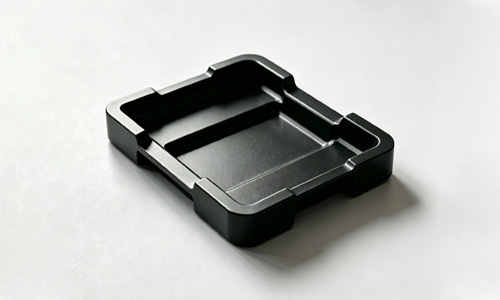
Thermosetting Plastic
- Phenolic Resin (PF): The earliest material used for compression molding, offering excellent electrical insulation, heat resistance, and flame retardancy. Suitable for electrical switches, sockets, automotive brake pads, etc. Density 1.3-1.5g/cm³, tensile strength 50-70MPa.
- Epoxy Resin (EP): High bonding strength, low shrinkage rate, excellent chemical stability. Ideal for aerospace composites, electronic encapsulation, high-performance insulators. Can be enhanced with various fillers.
- Unsaturated Polyester (UP): Cost-effective, good flowability, easy to color. Widely used for automotive body panels, sanitary ware, construction components. Glass fiber reinforced strength can reach 120MPa.
- Bulk Molding Compound (BMC): A ready-to-use thermosetting composite with short glass fibers and fillers. High strength, dimensionally stable, excellent insulation – perfect for automotive electrical parts, switch boxes, and other components needing strength and insulation. Smooth surface finish, ready for visible parts.
- Sheet Molding Compound (SMC): Similar to BMC but with longer fibers and higher strength. Commonly used for large parts like automotive body panels and battery boxes. Much lighter than metal, corrosion resistant, and offers great design flexibility.

Composite Materials
- Glass Fiber Reinforced Materials (GF): Most commonly used reinforcement, increases strength 2-3 times, cost-effective. Common content 20%-50%, suitable for structural parts, automotive components.
- Carbon Fiber Reinforced Materials (CF): Ultra-high strength, lightweight, good conductivity. Ideal for aerospace, high-end sports equipment, medical devices.
- Aramid Fiber Reinforced Materials (AF): High toughness, impact resistance, excellent insulation properties. Suitable for ballistic materials, electrical insulators materials.
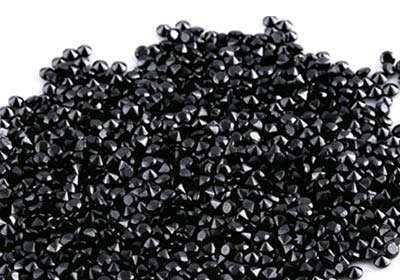
Special Functional Materials
- Conductive Materials: Added carbon black, metal fibers, surface resistance 10²-10⁶Ω, suitable for EMI shielding, anti-static components.
- Flame Retardant Materials: UL94 V-0 rating, oxygen index >30%, suitable for electrical equipment, rail transit components.
- High Temperature Resistant Materials: Long-term use temperature >200°C, suitable for engine surrounding parts, industrial equipment.
- Food Grade Materials: Compliant with FDA, EU10/2011 standards, suitable for cookware, food processing equipment.
Material Selection Guidelines
Performance Requirements First
Determine temperature resistance, strength, electrical requirements based on usage environment.
Cost-Benefit Balance
Choose the most cost-effective material while meeting performance requirements.
Process Adaptability
Consider material flowability, curing time, and equipment compatibility.
Regulatory Compliance
Ensure materials comply with industry standards and regulatory requirements.
Our Compression Molding Capabilities
Wontech’s compression molding capabilities enable the production of parts that meet diverse functional and aesthetic requirements. The following guidelines will help enhance part manufacturability, shorten lead times, and improve surface finish and structural integrity. You can refer to these standard design considerations for compression molded components.
Process Advantages
- Precise Temperature Control: Temperature fluctuations are controlled within ±3°C, ensuring uniform material curing.
- Precise Pressure Adjustment: Pressure adjustment range of 5-30MPa, adaptable to different materials and part requirements.
- Intelligent Curing Monitoring: Real-time monitoring of the curing process ensures optimal material performance.
- High-Efficiency Production: Over 15 years of experience in thermosetting material applications, providing professional material selection advice.
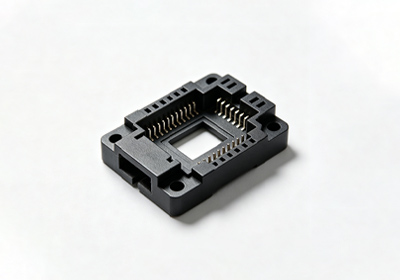
Standard
Description
Maximum Part Size
1000×800×400mm
39.4×31.5×15.8inch
Minimum Part Size
2×4×2mm
0.08×0.2×0.08 inch
The Range of Wall Thickness
From 0.5mm to 25mm
From 0.02 to 0.1 inch
Tolerance
+/- 0.05mm
+/- 0.002 inch
Volume Resistivity
≥1.0×10¹³ Ω·cm
Excellent electrical insulation properties
Mold Trial
T0, T1, and T2 verifications are conducted to confirm samples before mass production.
Quality Certification
ISO 9001, IATF 16949, ISO 13485, ISO14001
Is Compression Molding Right for Your Part?
Ideal
- Large Size: Parts with length or width exceeding 300mm
- Relatively Simple Structure: No complex internal structures or deep cavities
- High Strength Requirements: Applications requiring high load-bearing or impact resistance
- Composite materials required:glass fiber, carbon fiber reinforced materials
- High surface quality requirements:Grade A surface quality required
- Electrical performance requirements: insulation components, arc-resistant components
- High temperature resistance requirements: operating temperature exceeding 120°C
Challenging
- Miniature precision parts: dimensions less than 10mm or tolerance requirement ±0.01mm
- Complex internal structures: requiring complex mechanisms such as sliders and internal core pulling
- Complex internal structures: requiring complex mechanisms such as sliders and internal core pulling
- Thermoplastic materials: such as standard plastics like PP, PE, and ABS
- Extremely short lead times: samples need to be completed within 72 hours
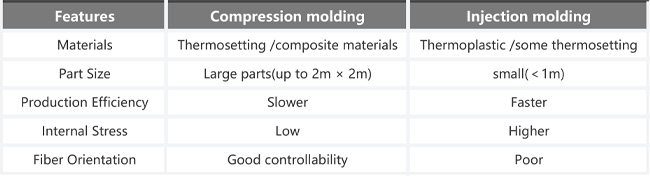
Compression Molding vs. Injection Molding

| Features | Compression molding | Injection molding |
|---|---|---|
| Materials | Thermosetting /composite materials | Thermoplastic /some thermosetting |
| Part Size | Large parts(up to 2m × 2m) | small(<1m) |
| Production Efficiency | Slower | Faster |
| Internal Stress | Low | Higher |
| Fiber Orientation | Good controllability | Poor |
FAQs For Compression Molding
Quick answers to common questions
“What are the minimum wall thickness and maximum size limits for compression molding? What is the production cycle time?”
The minimum wall thickness is typically 1.5mm (up to 1.0mm for special materials). The maximum size depends on equipment capacity; our existing equipment can mold parts up to 1000×800×400mm. For larger sizes, a split molding and assembly approach can be used.
Typical production cycle time is 5-15 minutes per piece, depending on part size, material type, and curing requirements. Small parts (<100mm) take approximately 3-5 minutes, medium parts (100-300mm) approximately 8-12 minutes, and large parts (>300mm) approximately 15-30 minutes. It is slower than injection molding, but mold costs are 30-50% lower.
“How to Choose the Right Compression Molding Material?”
Material selection is based on the following factors:
Environment: Temperature, humidity, chemical contact
Mechanical requirements: Strength, stiffness, toughness
Electrical properties: Insulation, conductivity
Regulatory requirements: Food grade, medical grade, flame retardant rating
Cost budget: Material costs account for 40-60% of the total cost
We offer free material selection consultation services and recommend the optimal solution based on the specific application.
"How do you ensure the consistency of compression molded products' quality?"
We employ a four-level quality control system:
Material Inspection: 100% material performance testing to ensure batch consistency.
Process Control: Real-time monitoring of temperature, pressure, and time parameters; SPC statistical process control.
First Article Inspection: Full-dimensional inspection of the first piece of each batch; CMM coordinate measuring machine (CMM) measurement.
Outgoing Inspection: Sampling according to AQL 1.0 standards; 100% inspection of critical dimensions. Our quality traceability system records the production parameters of each part, allowing traceability to specific production batches and operators.
“How to handle defects in compression molded products?”
Defects and solutions:
Insufficient material/insufficient filling: Adjust material quantity, increase temperature, increase pressure.
Flash/burrs: Check mold fit, reduce pressure, optimize venting.
Bubble/voids: Improve venting, adjust curing curve, preheat material.
Deformation/warpage: Optimize cooling process, adjust ejection system, improve part design.
“What industries use compression molding?”
Compression molding services are widely used in more than 20 industries, including: automotive manufacturing (e.g., battery boxes, electrical components); electronics and electrical appliances (e.g., circuit breakers, switch panels); medical devices (e.g., surgical instrument handles, diagnostic equipment housings); aerospace (e.g., cabin interiors, drone structures); energy and power (e.g., photovoltaic junction boxes, insulators); industrial manufacturing (e.g., power tool housings, machine parts); consumer goods (e.g., kitchenware, sports equipment); building materials (e.g., bathroom fixtures, pipe fittings); and rail transportation (e.g., train interiors, fireproof partitions), covering almost all fields requiring high-performance plastic and composite material parts.
Partner with Us. Engineer Your Success.
- Get Your Motor Efficiency Analysis Report
- Download Motor Mold Guide
- Talk to a Molding Expert

- No.2, South Huatai East Road, Caosan PioneerPark,ZhongShan,Guangdong,China
- +86 13326981626
- ocean.h@wanglai.cn
CAPABILITIES
COMPANY




Copyright ©2026 Wontech | Powered by Wontech.All Rights Reserved.