
Mold Trial Solutions for Mass Production
Before putting a mold into mass production, a precise mold trial verification is your most important investment. It is not just a simple experiment, but a comprehensive test of mold design, material properties, and process parameters, aiming to reduce mass production risks to zero.We focus on providing professional mold trial and verification solutions for those seeking large-scale, high-stability production.
WHAT IS MOLD TRIAL VERIFICATION?
Use Proven Mold Trial Ensure Risk-Free Production
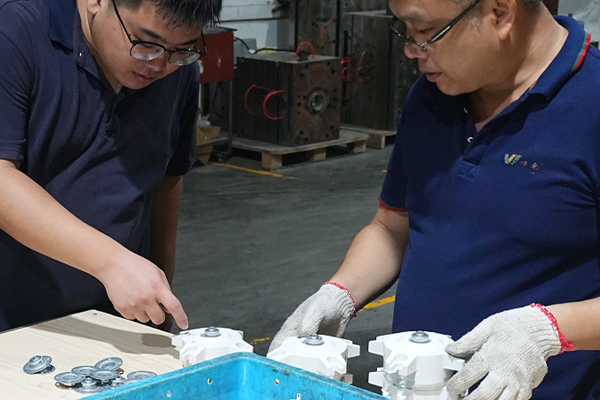
Trial molding is a crucial step after mold manufacturing is completed and before mass production begins. It refers to the initial mold test conducted under actual mass production conditions, using predetermined injection molding machines, raw materials, and process parameters, to produce the first batch of samples.
Purpose:To verify the functionality, stability, and process reliability of the mold, and to optimize standard process parameters for mass production.
Process: Mold installation → Equipment preheating → Initial debugging → Fine optimization → Verification and delivery
Key checks: material temperature, mold temperature, pressure system, injection speed, cooling/holding time, and position and motion parameters.
Results:Validates the mold design and process for mass production. A comprehensive mold trial report will be generated.
WHAT IS MOLD TRIAL VERIFICATION?
Use Proven Mold Trial Ensure Risk-Free Production
Mold Trial is a crucial step after mold manufacturing is completed and before mass production begins. It refers to the initial mold test conducted under actual mass production conditions, using predetermined injection molding machines, raw materials, and process parameters, to produce the first batch of samples.
Purpose:To verify the functionality, stability, and process reliability of the mold, and to optimize standard process parameters for mass production.
Process: Mold installation → Equipment preheating → Initial debugging → Fine optimization → Verification and delivery.
Key checks: material temperature, mold temperature, pressure system, injection speed, cooling/holding time, and position and motion parameters.
Results:Validates the mold design and process for mass production. A comprehensive mold trial report will be generated.
WHY MOLD TRIAL VERIFICATION?
Mold Trial Verification Focuses on Optimizing Mass Production
Completing trial molding before mass production and replicating real production conditions can avoid the following mass production risks:
- Structural risks: Dimensional deviations and assembly failures caused by mold design flaws.
- Quality risks: Batch-scale problems such as appearance defects and insufficient strength due to material and process mismatches.
- Stability risks: Direct mass production using unverified processes, leading to yield fluctuations and uncontrolled costs.
Industry data shows that for every 10% increase in the initial trial molding pass rate, the mass production cycle is shortened by 15%.
WHY MOLD TRIAL VERIFICATION?
Mold Trial Verification Focuses on Optimizing Mass Production
Completing trial molding before mass production and replicating real production conditions can avoid the following mass production risks:
- Structural risks: Dimensional deviations and assembly failures caused by mold design flaws.
- Quality risks: Batch-scale problems such as appearance defects and insufficient strength due to material and process mismatches.
- Stability risks: Direct mass production using unverified processes, leading to yield fluctuations and uncontrolled costs.
How to Conduct Mold Trial Verification Under Different Structures?
Different product structures face vastly different core challenges in trial molding and verification. General verification methods cannot accurately expose potential risks. Therefore, we adopt a technical approach of “structural classification and precise verification,” concentrating verification resources on the aspects most likely to cause problems to ensure the reliability of the conclusions.
Structure-based Customized Verification Scheme
For deep-cavity,thin-walled components
Challenges: Prone to incomplete filling, high stress, and ejection deformation.
Solution: Verification of limit filling and deformation control. A special mold venting and high-response hot runner system is employed. During trial molding, the pressure at the filling end and dimensional springback after demolding are closely monitored to ensure manufacturability at the limit wall thickness.
For precision gears/structural components
Challenges: Non-compliance with dimensional tolerances, concentricity deviations, and insufficient lifespan.
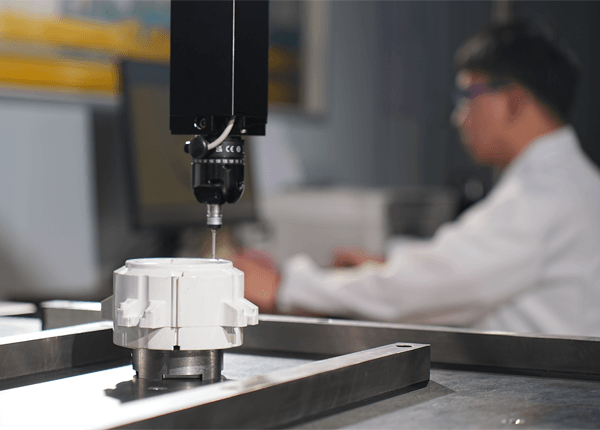
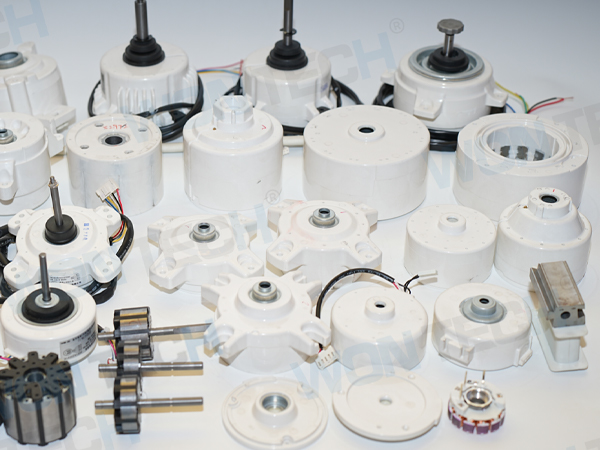
Solution: Dimensional stability and functional verification. Using high-rigidity steel and a precision temperature control system, the core of the trial molding process involves collecting multiple sample molds, performing continuous statistical analysis to verify whether the dimensions are stably distributed within tolerances, and directly conducting meshing and lifespan tests.
For large exterior components
Challenges: Surface flow marks, visible weld lines, uneven gloss.
Solution: Surface quality and appearance verification. Molds are mirror-polished or have custom textures. During trial molding, we focus on adjusting the appearance process parameters and review them under a standard light box to ensure the appearance meets A-side standards.
For complex,porous insert components
Challenges: Low weld line strength, inadequate insert coverage, and internal stress cracking.
Solution: Structural strength and process verification. During trial molding, injection speed and pressure are adjusted, samples are dissected to check weld line quality, and pull-out force tests are performed to set safe boundaries for mass production.
Real Process Simulation
Prototype Mold Manufacturing
Simplified steel or high-performance aluminum molds, specially designed and rapidly fabricated, are used to validate prototypes. However, the steel, polishing, and cooling layout of the core molding areas are designed according to mass production standards to ensure that the produced samples are representative of key properties.
Real Process Replication
On actual mass production machines, we insist on using engineering plastic raw materials that are completely consistent with the mass production plan, and use the pressure and speed curves from mass production for calibration. This ensures that the mechanical properties, shrinkage behavior, and molecular orientation of the prototypes are highly consistent with the future mass-produced parts, making the validation conclusions credible.
Data Debugging and Functional Verification
Defect Discovery and Data Collection:
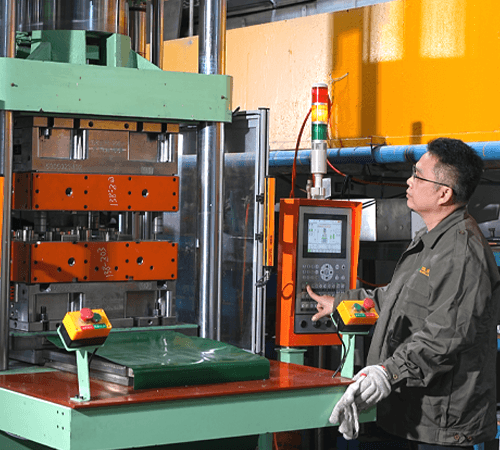
Through segmented injection molding and in-mold sensing technologies, we record the filling time, cavity pressure, and temperature profiles for each injection. This reveals and locates the root cause of problems, whether it’s shrinkage marks due to uneven cooling or scorching caused by poor venting.
Mass Production Process Window Exploration
Through experiments with multiple parameters (variing melt temperature, injection speed, holding pressure, and time), we find a stable and reproducible optimal process window for you, which is the cornerstone of future mass production stability.
Assembly Verification
Check for gaps and surface differences with adjacent components, assembly feel, etc.
Performance Testing
Samples are provided for your use in durability fatigue testing, environmental aging testing, and sealing and waterproofing testing. Test results will be fully documented and used to confirm the design or guide the final optimization of molds and materials.
How to Conduct Mold Trial Verification Under Different Structures?
Structure-based Customized Verification Scheme
For deep-cavity,thin-walled components
Challenges: Prone to incomplete filling, high stress, and ejection deformation.
Solution: Verification of limit filling and deformation control. A special mold venting and high-response hot runner system is employed. During trial molding, the pressure at the filling end and dimensional springback after demolding are closely monitored to ensure manufacturability at the limit wall thickness.
For precision gears/structural components
Challenges: Non-compliance with dimensional tolerances, concentricity deviations, and insufficient lifespan.
Solution: Dimensional stability and functional verification. Using high-rigidity steel and a precision temperature control system, the core of the trial molding process involves collecting multiple sample molds, performing continuous statistical analysis to verify whether the dimensions are stably distributed within tolerances, and directly conducting meshing and lifespan tests.
For large exterior components
Challenges: Surface flow marks, visible weld lines, uneven gloss.
Solution: Surface quality and appearance verification. Molds are mirror-polished or have custom textures. During trial molding, we focus on adjusting the appearance process parameters and review them under a standard light box to ensure the appearance meets A-side standards.
For complex,porous insert components
Challenges: Low weld line strength, inadequate insert coverage, and internal stress cracking.
Solution: Structural strength and process verification. During trial molding, injection speed and pressure are adjusted, samples are dissected to check weld line quality, and pull-out force tests are performed to set safe boundaries for mass production.
Real Process Simulation
Prototype Mold Manufacturing
Simplified steel or high-performance aluminum molds, specially designed and rapidly fabricated, are used to validate prototypes. However, the steel, polishing, and cooling layout of the core molding areas are designed according to mass production standards to ensure that the produced samples are representative of key properties.
Real Process Replication
On actual mass production machines, we insist on using engineering plastic raw materials that are completely consistent with the mass production plan, and use the pressure and speed curves from mass production for calibration. This ensures that the mechanical properties, shrinkage behavior, and molecular orientation of the prototypes are highly consistent with the future mass-produced parts, making the validation conclusions credible.
Data Debugging and Functional Verification
Defect Discovery and Data Collection
Through segmented injection molding and in-mold sensing technologies, we record the filling time, cavity pressure, and temperature profiles for each injection. This reveals and locates the root cause of problems, whether it’s shrinkage marks due to uneven cooling or scorching caused by poor venting.
Mass Production Process Window Exploration
Through experiments with multiple parameters (variing melt temperature, injection speed, holding pressure, and time), we find a stable and reproducible optimal process window for you, which is the cornerstone of future mass production stability.
Assembly Verification
Check for gaps and surface differences with adjacent components, assembly feel, etc.
Performance Testing
Samples are provided for your use in durability fatigue testing, environmental aging testing, and sealing and waterproofing testing. Test results will be fully documented and used to confirm the design or guide the final optimization of molds and materials.
3 Key Factors for Successful Mold Trial
Material Shrinkage Rate Confirmation
Provide accurate plastic grades and their shrinkage rate data under specific operating conditions. This is especially important for sensitive engineering plastics; failure to provide accurate data can lead to dimensional deviations in verification samples, increasing the complexity and cost of subsequent adjustments by more than 30%.
- Missing shrinkage rate → Mold flow simulation failure → Decreased mold trial pass rate
Key Tolerance Requirements
Which dimensions on the product are considered critical tolerances (within ±0.05mm, especially precision areas above ±0.02mm)?
For areas involving ultra-high precision, standard trial molding analysis may be insufficient. It is necessary to initiate CAE (Computational Flow Analysis) and precise mold design to predict and optimize deformation trends in advance.
- Unspecified precision → Incorrect gate design → Out-of-tolerance dimensions in mass production
Expected Mass Production Speed
What is the target production efficiency?
High-speed production poses extreme challenges to the thermal balance and cooling efficiency of the mold. During mold trial verification, continuous cycle production testing and mold thermal imaging analysis must be conducted to verify the temperature stability of the mold under continuous operation, in order to fundamentally avoid dimensional drift, product deformation, or quality fluctuations caused by heat accumulation during mass production.
- Unverified thermal equilibrium → Mold temperature field imbalance → Loss of mold batch stability
Partner with Us. Engineer Your Success.
- Obtain A Comprehensive Trial Report
- Understand the Verification Process
- Get Industry Data Analysis

- No.2, South Huatai East Road, Caosan PioneerPark,ZhongShan,Guangdong,China
- +86 13326981626
- ocean.h@wanglai.cn
CAPABILITIES




Copyright ©2025 Wontech | Powered by Wontech.All Rights Reserved.