
Mold Design And Manufacturing
We provide seamlessly integrated mold services—from design and making to processing, inspection, and maintenance—serving as a single, reliable source for precision molds across diverse global industries. We understand that superior tooling is the foundation of product quality, manufacturing efficiency, and cost control, and we are committed to providing seamless support from concept to full-scale production.
Custom Mold Services for Your Industry
At Wontech, our priority is delivering absolute reliability. We design for manufacturability to ensure your mold consistently produces high-quality parts, batch after batch. We exist to not just meet, but exceed your strictest expectations for performance and longevity. That’s the Wontech promise.
WHAT CAN WE DO?
- Injection Mold
- Multi-Cavity Mold
- Hot Runner Mold
- Insert Mold
- BMC Mold
- Motor Mold
- Precision Mold
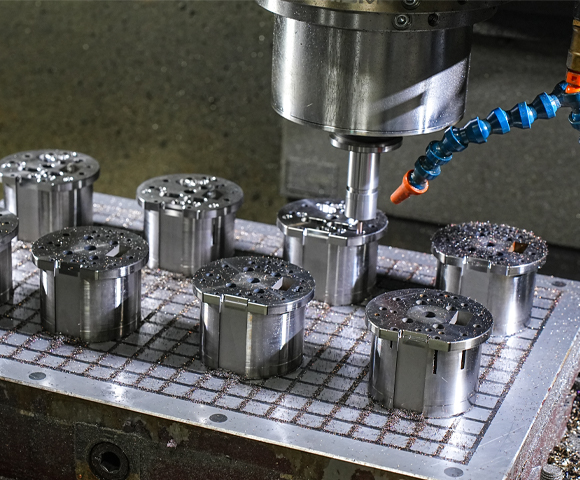
Custom Mold Services for Your Industry
At Wontech, our priority is delivering absolute reliability. We design for manufacturability to ensure your mold consistently produces high-quality parts, batch after batch. We exist to not just meet, but exceed your strictest expectations for performance and longevity. That’s the Wontech promise.
WHAT CAN WE DO?
- Injection Mold
- Multi-Cavity Mold
- Hot Runner Mold
- Insert Mold
- BMC Mold
- Motor Mold
- Precision Mold
Custom Mold Services for Your Industry
At Wontech, our priority is delivering absolute reliability. We design for manufacturability to ensure your mold consistently produces high-quality parts, batch after batch. We exist to not just meet, but exceed your strictest expectations for performance and longevity. That’s the Wontech promise.
WHAT CAN WE DO?
- Injection Mold
- Multi-Cavity Mold
- Hot Runner Mold
- Insert Mold
- BMC Mold
- Motor Mold
- Precision Mold
The End-to-End Process of Mold Manufacturing
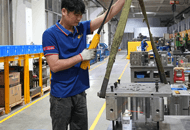
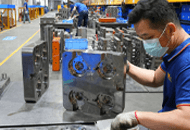
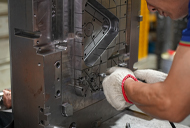
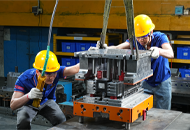
Through our systematic process, we ensure precision at every stage: from analyzing your needs and creating 3D mold designs, to precision-engineered CNC machining, EDM, and surface treatment, through trial production, quality inspection, and final global delivery—all with end-to-end transparency.
01
02
03
04
05
06
Drawings Received
DFM Review&Permitted
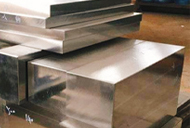
Material Preparation
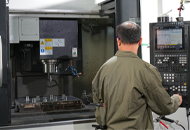
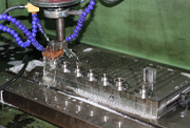
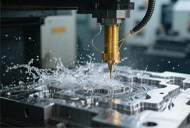
CNC Machining
EDM Machining
WEDM Maching
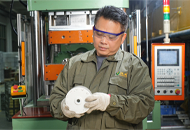
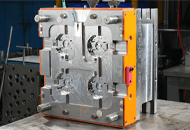
07
08
09
10
11
12
Mold Base Assembly
Core Fitting
Surface Finishing
Mold Assembly
Mold Trial
Mold Handover
The End-to-End Process of Mold Manufacturing
Through our systematic process, we ensure precision at every stage: from analyzing your needs and creating 3D mold designs, to precision-engineered CNC machining, EDM, and surface treatment, through trial production, quality inspection, and final global delivery—all with end-to-end transparency.
01
02
03
04
05
DFM Review&Permitted
Material Preparation
CNC Machining
EDM Machining
WEDM Maching
06
07
08
09
10
Core Fitting
Surface Finishing
Mold Assembly
Mold Trial
Mold Handover
The End-to-End Process of Mold Manufacturing
Through our systematic process, we ensure precision at every stage: from analyzing your needs and creating 3D mold designs, to precision-engineered CNC machining, EDM, and surface treatment, through trial production, quality inspection, and final global delivery—all with end-to-end transparency.
01
02
03
DFM Permitted
Material Preparation
CNC Machining
04
05
06
EDM Machining
WEDM Maching
Core Fitting
07
08
09
Surface Finishing
Mold Assembly
Mold Trial

Why Choose Wontech's Mold Service?
Where seamless project management, certified quality, and expert DFM analysis come together.
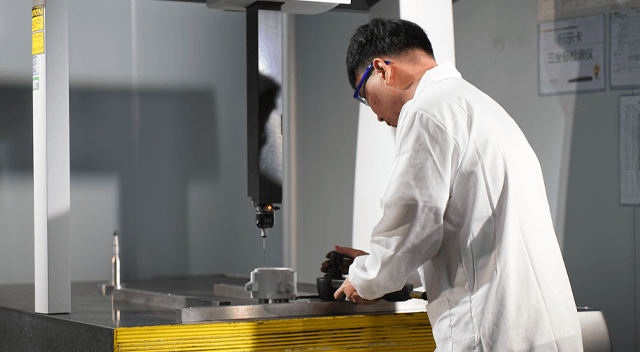
Integrated Mold Service
Design → Manufacturing → Trial Molding → Delivery
Streamline your project by having us manage the entire workflow, saving you time and resources while mitigating project risks.
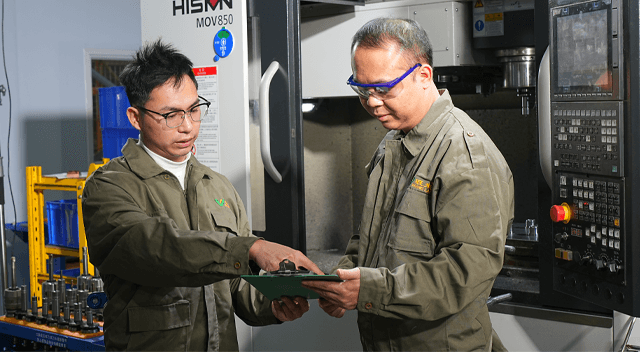
Quality Assurance
ISO9001:2015 / ISO14001:2015
IAFT16949:2016 / ISO13485:2016
Our certified quality and reliability, backed by international standards and your trust.
Why Choose Wontech's Mold Service?
Where seamless project management, certified quality, and expert DFM analysis come together.
Integrated Mold Service
Design → Manufacturing → Trial Molding → Delivery
Streamline your project by having us manage the entire workflow, saving you time and resources while mitigating project risks.
Quality Assurance
ISO9001:2015 / ISO14001:2015
IAFT16949:2016 / ISO13485:2016
Our certified quality and reliability, backed by international standards and your trust.
Our Mold Design Capabilities
We know a high-performance mold begins with intelligent design, long before steel is cut. Our team leverages proven experience and advanced simulation to deliver a production-ready design optimized for cost, quality, and longevity. This is how we engineer precision, reliability, and efficiency into your mold from the very first concept.
DFM Analysis
- Free DFM Review:We analyze your 3D CAD model to identify manufacturability risks (e.g., wall thickness variations, undercut features, draft angles) and propose cost-effective design improvements.
- Material Selection Guidance: Based on your part’s functional requirements (e.g., thermal resistance, electrical insulation, mechanical strength), we recommend the most suitable materials.
- Cost Optimization: We suggest design changes to reduce mold complexity, shorten cycle time, or eliminate post-molding operations (e.g., trimming, welding)
Advanced CAE Simulation with Moldflow
- Predictive Analysis: Using Autodesk Moldflow, we simulate injection molding behavior to resolve issues like sink marks, warpage, air traps, and flow imbalance before tooling.
- Critical Applications: For motor molds, BMC parts, or multi-cavity tools, we optimize gate placement, cooling channels, and packing pressure to ensure consistent quality.
- First Shot Success: By resolving potential defects in simulation, we reduce mold trials by up to 60%, saving time and cost.
Mold Trial & Validation
- Comprehensive Trial Process: After mold assembly, we conduct a full-scale trial under production-like conditions using your specified material.
Part Quality Inspection: Every trial part undergoes rigorous checks:
dimensional accuracy,visual defects and functional performance.- Transparent Reporting: You receive a complete Mold Trial Report, including:process parameters used,photos of molded parts,dimensional reports,recommendations for fine-tuning
- Remote Participation Option:We offer live video calls during trials or share recorded sessions—so you can witness the process in real time, no matter your location.
Engineered Mold Life
- Tailored Mold Life Strategy: Based on your annual production volume and material abrasiveness, we recommend differ mold life plans,such as standard Duty: 500,000+ shots,heavy Duty: 1 million+ shots,ultra-High Life: Up to 2 million shots.
- Wear-Resistant Design: Features like modular ejector systems, wear-resistant coatings, and precision-guided cores ensure long-term performance.
Our Mold Manufacturing Capabilities
We specialize in high-precision, reliable mold solutions. Our advanced equipment—including 5-axis CNC, EDM, and WEDM—ensures efficient handling of complex structures. With deep expertise in motor molds, BMC molds, and multi-cavity hot runner systems, we are your trusted manufacturing partner.
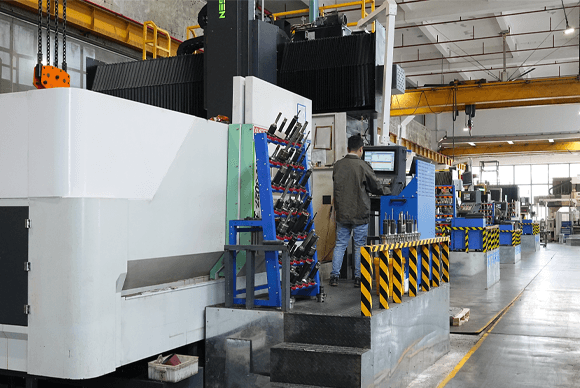
High-precision Equipment for Molds and Parts
We are equipped with advanced mold-making equipment to ensure the precise realization of complex structures and intricate features. All equipment is regularly calibrated and maintained to guarantee long-term stable operation.
- 3-axis CNC Machining Center
- 5-axis CNC Machining Center
- High-precision EDM Machine
- Wire EDM
- Milling Machine
- Grinding Machine
- Drilling Machine
- Mold Fitting Machine
- 2.5D Projector
- Height Gauge
- Coordinate Measuring Machine
- Hardness Tester
Material Compatibility
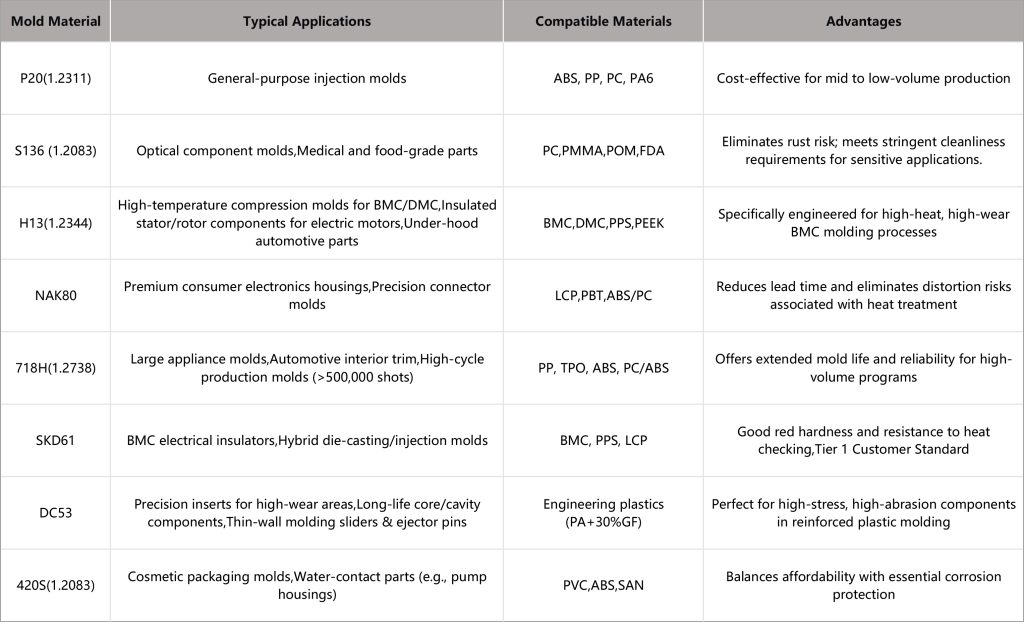
All materials are sourced from certified suppliers and comply with international standards (e.g., DIN, AISI, JIS).
Our team is highly experienced in machining a wide range of mold steels and engineering materials. We provide tailored material recommendations based on your part’s functional requirements—such as electrical insulation for motor housings or thermal stability for under-hood automotive components.
Precision Machining Tolerances
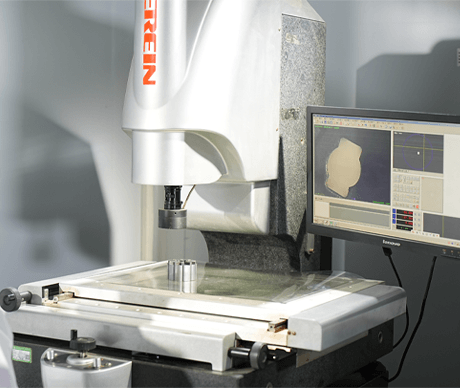
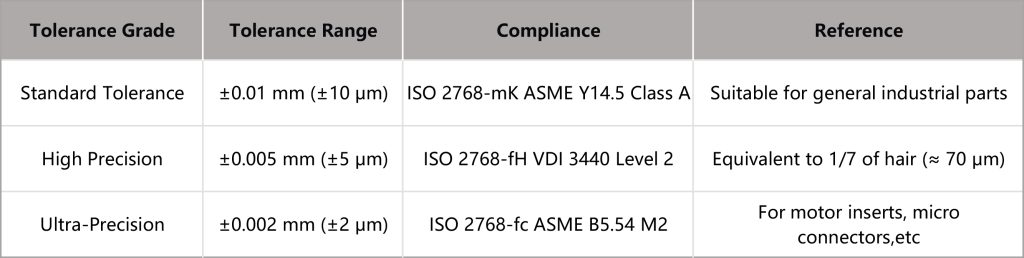
Our machining processes consistently achieve tolerances as tight as ±0.005 mm, compliant with ISO 2768-mK standards. Whether it’s cores, cavities, sliders, or micro-inserts, we guarantee dimensional accuracy and assembly reliability.
Our precision capabilities are verified by third-party calibration reports and supported by state-of-the-art Multi-axis CNC and WEDM equipment.
Surface Finishing Options
We offer a comprehensive range of surface finishing options to meet both functional and aesthetic requirements.
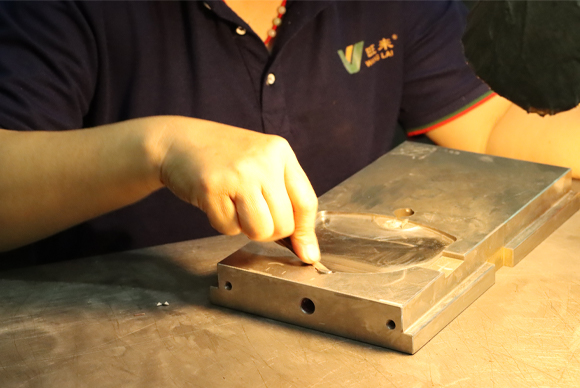
- Polishing: Achieve mirror finishes down to Ra ≤ 0.025 μm, ideal for optical components or high-gloss consumer products.
- Coatings: Available options include nickel plating for corrosion resistance and hardness, hard chrome plating for wear resistance, and nitriding for surface hardening to extend mold life.
- Texturing: Compliant with MT-11003 or VDI 3400 standards; we also replicate custom textures from physical samples—such as leather grain, stipple, or geometric patterns—for brand differentiation.
Our Mold Manufacturing Capabilities
We specialize in high-precision, reliable mold solutions. Our advanced equipment—including 5-axis CNC, EDM, and WEDM—ensures efficient handling of complex structures. With deep expertise in motor molds, BMC molds, and multi-cavity hot runner systems, we are your trusted manufacturing partner.
High-precision Equipment for Molds and Parts
We are equipped with advanced mold-making equipment to ensure the precise realization of complex structures and intricate features. All equipment is regularly calibrated and maintained to guarantee long-term stable operation.
- 3-axis CNC Machining Center
- 5-axis CNC Machining Center
- High-precision EDM Machine
- Wire EDM
- Milling Machine
- Grinding Machine
- Drilling Machine
- Mold Fitting Machine
- 2.5D Projector
- Height Gauge
- Coordinate Measuring Machine
- Hardness Tester
Material Compatibility
All materials are sourced from certified suppliers and comply with international standards (e.g., DIN, AISI, JIS).
Our team is highly experienced in machining a wide range of mold steels and engineering materials. We provide tailored material recommendations based on your part’s functional requirements—such as electrical insulation for motor housings or thermal stability for under-hood automotive components.
|
Mold Material
|
Typical Applications
|
Compatible Materials
|
Advantages
|
|---|---|---|---|
|
P20(1.2311)
|
General-purpose injection molds
|
ABS, PP, PC, PA6
|
Cost-effective for mid to low-volume production
|
|
S136 (1.2083)
|
Optical component molds,Medical and food-grade parts
|
PC,PMMA,POM,FDA
|
Eliminates rust risk; meets stringent cleanliness requirements for sensitive applications.
|
|
H13(1.2344)
|
High-temperature compression molds for BMC/DMC,Insulated stator/rotor components for electric motors,Under-hood automotive parts
|
BMC,DMC,PPS,PEEK
|
Specifically engineered for high-heat, high-wear BMC molding processes
|
|
NAK80
|
Premium consumer electronics housings,Precision connector molds
|
LCP,PBT,ABS/PC
|
Reduces lead time and eliminates distortion risks associated with heat treatment
|
|
718H(1.2738)
|
Large appliance molds,Automotive interior trim,High-cycle production molds (>500,000 shots)
|
PP, TPO, ABS, PC/ABS
|
Offers extended mold life and reliability for high-volume programs
|
|
SKD61
|
BMC electrical insulators,Hybrid die-casting/injection molds
|
BMC, PPS, LCP
|
Good red hardness and resistance to heat checking,Tier 1 Customer Standard
|
|
DC53
|
Precision inserts for high-wear areas,Long-life core/cavity components,Thin-wall molding sliders & ejector pins
|
Engineering plastics (PA+30%GF)
|
Perfect for high-stress, high-abrasion components in reinforced plastic molding
|
|
420S(1.2083)
|
Cosmetic packaging molds,Water-contact parts (e.g., pump housings)
|
PVC,ABS,SAN
|
Balances affordability with essential corrosion protection
|
Precision Machining Tolerances
Our machining processes consistently achieve tolerances as tight as ±0.005 mm, compliant with ISO 2768-mK standards. Whether it’s cores, cavities, sliders, or micro-inserts, we guarantee dimensional accuracy and assembly reliability.
Our precision capabilities are verified by third-party calibration reports and supported by state-of-the-art Multi-axis CNC and WEDM equipment.
|
Tolerance Grade
|
Tolerance Range
|
Compliance
|
Reference
|
|---|---|---|---|
|
Standard Tolerance
|
±0.01 mm (±10 μm)
|
ISO 2768-mK ASME Y14.5 Class A
|
Suitable for general industrial parts
|
|
High Precision
|
±0.005 mm (±5 μm)
|
ISO 2768-fH VDI 3440 Level 2
|
Equivalent to 1/7 of hair (≈ 70 μm)
|
|
Ultra-Precision
|
±0.002 mm (±2 μm)
|
ISO 2768-fc ASME B5.54 M2
|
For motor inserts, micro connectors,etc
|
Surface Finishing Options
We offer a comprehensive range of surface finishing options to meet both functional and aesthetic requirements.
- Polishing: Achieve mirror finishes down to Ra ≤ 0.025 μm, ideal for optical components or high-gloss consumer products.
- Coatings: Available options include nickel plating for corrosion resistance and hardness, hard chrome plating for wear resistance, and nitriding for surface hardening to extend mold life.
- Texturing: Compliant with MT-11003 or VDI 3400 standards; we also replicate custom textures from physical samples—such as leather grain, stipple, or geometric patterns—for brand differentiation.
Client Inquiries

"How do you ensure the final product meets our specifications during the mold design phase?"
Our design process begins with a comprehensive requirements analysis where we thoroughly understand your product specifications, material choices, production volume, and quality standards.
We utilize industry-leading software including SolidWorks, UG NX, and AutoCAD for 3D modeling, combined with advanced Moldflow simulation to analyze material flow, cooling efficiency, and potential deformation risks before any physical tooling begins.
Our engineering team conducts three critical design reviews at key milestones, incorporating feedback loops that allow you to validate each stage of development. We employ Design for Manufacturability (DFM) principles to optimize your product for efficient production while maintaining functional requirements.
Additionally, we create virtual prototypes to identify and resolve potential issues such as weld lines, air traps, or uneven cooling that could affect part quality.
Our collaborative cloud-based platform enables real-time design sharing and feedback, ensuring complete transparency throughout the process. This systematic approach not only minimizes costly revisions later but also significantly reduces time-to-market while guaranteeing that the final product precisely meets your performance, aesthetic, and dimensional requirements.
“How do you offer competitive pricing while maintaining high quality?”
We achieve the optimal balance between quality and pricing through three core strategies. First, we implement a comprehensive vertically integrated production model, concentrating the entire process—from mold design and precision machining to trial molding, mass production, and post-processing—within a single modern manufacturing facility. This integrated operational model not only eliminates communication costs and quality risks associated with outsourcing but also optimizes internal resource allocation, reducing overall costs by an average of 15-20%.
Second, we’ve invested in an advanced smart manufacturing system featuring real-time production monitoring, automated quality inspection, and predictive maintenance capabilities. This system significantly improves equipment utilization (by approximately 25%) while keeping scrap rates below half the industry average.
Third, we’ve established strategic partnerships with world-class material suppliers such as BASF, SABIC, and Sumitomo Chemical, securing more competitive raw material prices through annual procurement agreements and joint development projects, advantages we partially pass on to our clients.
We firmly believe quality is at the core of competitiveness, so we never compromise quality standards to reduce costs. Instead, we optimize overall operational efficiency through continuous technological innovation, lean production, and economies of scale. Our unique value also lies in providing comprehensive TCO (Total Cost of Ownership) analysis services, helping clients evaluate true costs from multiple dimensions including mold lifespan, maintenance costs, production efficiency, and material utilization.
For example, we redesigned the mold structure for a European motor manufacturer—though the initial investment increased by 8%, the extended mold lifespan by 40% and improved production efficiency by 25% saved the client over €350,000 in comprehensive costs within 18 months. This long-term value-oriented partnership model has enabled us to maintain relationships with 80% of our international clients for more than five consecutive years.
“What kind of support services do you provide if mold malfunctions occur during use?”
We have established a comprehensive global remote technical support system, committing to an initial response within 2 hours of receiving a failure notification and providing detailed solutions within 24 hours.
Our services are delivered entirely through advanced remote collaboration technologies: using high-definition video conferencing, screen sharing, AR (augmented reality) guidance, and real-time 3D model annotations, our expert team can accurately diagnose over 90% of common mold issues remotely.
We provide each global client with a dedicated technical support account to upload failure videos, photos, and parameter data for analysis by our senior engineering team. For complex problems, we offer step-by-step repair guidance videos and detailed illustrated tutorials, and can coordinate with qualified local repair service providers for hands-on operations.
We’ve also developed a comprehensive digital knowledge base containing solutions for 200+ common failure scenarios. Through our proactive remote monitoring service, we can provide early warnings for potential issues. Clients have access to 24/7 multilingual technical support hotlines staffed by experienced mold engineers working in shifts, ensuring professional guidance is available at any time to minimize downtime and extend mold service life.
“How do you ensure the protection of my mold design and intellectual property?”
We place great emphasis on protecting our clients’ intellectual property rights, integrating security measures into every aspect of our operations. First, we sign legally binding Non-Disclosure Agreements (NDAs) with each client, clearly defining intellectual property ownership and confidentiality obligations, covering the entire project lifecycle. All design documents are stored on independent servers, implementing a strict hierarchical access control system—only core engineers authorized by the project manager can access specific files, and all access is automatically recorded and audited by the system.
Our physical security is equally robust: the design department is completely isolated from the production workshop, equipped with access control systems and 24-hour monitoring; critical data is not stored in the cloud but on offline servers, with off-site backups performed three times a week.
All employees must receive intellectual property protection training and sign a confidentiality agreement before joining the company, and continue to bear confidentiality obligations for two years after leaving. Furthermore, we are ISO 27001 information security management system certified and undergo annual third-party security audits. Over the past decade, we have served more than 300 companies worldwide without a single intellectual property breach, which is one of the core reasons why many Fortune 500 companies choose to cooperate with us long-term.
“What is the typical lifespan of a mold? What factors affect mold longevity?”
Mold lifespan is a complex technical metric influenced by multiple factors. In professional mold manufacturing, we provide differentiated solutions based on various application scenarios. Our standard precision molds use high-quality P20 or 718H steel with professional heat treatment, capable of stably producing 500,000 to 1 million shots; for high-demand applications, we use specialized mold steels like H13 and S136, combined with optimized cooling channel designs and surface treatments (such as TD treatment and PVD coating), achieving lifespans of 2-3 million shots or higher.
The core factors affecting mold longevity include: material selection—different steels have significant variations in hardness, toughness, and corrosion resistance; design rationality, especially cooling system layout and stress concentration area treatment; characteristics of injection materials, as engineering plastics containing glass fibers or other reinforcements cause more severe wear; and production environment with operational protocols, including injection parameter settings, regular maintenance frequency, and preventive maintenance measures.
Our company has established a comprehensive mold lifespan prediction model that identifies potential risk points through CAE analysis in advance. Additionally, we provide each client with detailed mold usage and maintenance manuals, and can develop customized maintenance plans based on mass production schedules. During the project’s initial phase, we thoroughly understand your annual production requirements, product material characteristics, and quality standards to recommend the most cost-effective mold configuration, ensuring optimal return on investment throughout its lifecycle.
“How long does it typically take from design to completion for a mold? How can the delivery cycle be shortened?”
Mold delivery cycles depend on several critical factors, including product complexity, precision requirements, number of cavities, and special process needs. Standard precision single or double-cavity molds typically require 4-8 weeks to complete, while high-precision, multi-cavity molds or those with complex sliders/core pulls may take 8-12 weeks. To shorten delivery cycles, we implement a comprehensive acceleration strategy:
First, we employ concurrent engineering methods, involving manufacturing, quality control, and production teams from the design phase to identify potential issues early.
Second, our production facility operates 24/7 with three shifts and automated machining equipment to ensure uninterrupted critical processes.
Third, we utilize advanced project management software to monitor each stage in real-time with milestone warning mechanisms that automatically adjust subsequent process priorities if delays occur.
For urgent projects, we offer a dedicated “Rapid Response Channel” that reduces standard delivery times by 25-30% through exclusive project teams, priority scheduling, and parallel testing validation. Before project initiation, we conduct detailed DFM (Design for Manufacturing) analysis, jointly confirm timeline milestones with you, and provide transparent schedules with buffer periods.
We believe that true rapid delivery shouldn’t compromise quality through rushed work but should be achieved through process optimization, rational resource allocation, and advanced technology applications. Over the past three years, we have successfully delivered more than 200 urgent mold projects to global clients, achieving a 92% average early delivery rate while maintaining a 99.5% first-trial molding success rate.
“How do you ensure consistency between the results of mold simulation analysis (CAE) and actual production performance? How do you resolve discrepancies when they occur?”
1)Simulation-to-reality consistency is at the heart of our technical system. We’ve developed a “Closed-Loop Verification-Calibration” system that significantly enhances prediction accuracy. During simulation, we go beyond standard material databases by conducting rheological testing on each material batch in our dedicated testing center, obtaining precise viscosity curves, PVT data, and thermal properties for Moldflow input. Additionally, we create digital twin models of molds that integrate not just geometry but actual thermal conductivity coefficients, cooling water parameters, and machine response characteristics.
2)To validate simulation accuracy, we embed miniature sensors (temperature, pressure, strain) at critical locations and collect real-time data during T0 trials for comparison with predictions. When deviations exceed thresholds (typically >5°C temperature difference or >10% pressure difference), our “Three-Stage Diagnostic Method” activates: Stage 1 analyzes material parameter deviations using inline rheometers; Stage 2 evaluates machine-mold interaction by examining clamping force distribution, injection rate response, and temperature control systems; Stage 3 conducts in-depth thermal balance analysis using infrared thermography.
3)Based on diagnostics, we apply “Incremental Optimization” – making ±5% adjustments to critical parameters (V/P switchover points, packing profiles, cooling time), validating after each change, and recording response patterns. Our “Simulation-Reality Deviation Factor Library” has accumulated data from over 2,000 trial runs, elevating our prediction accuracy from the industry average of 70-75% to 92-95%. In a BMC motor stator mold project, we reduced dimensional prediction errors from ±0.15mm to ±0.03mm, dramatically decreasing trial runs and development cycles.
FAQ
"How do you ensure the final product meets our specifications during the mold design phase?"
Our design process begins with a comprehensive requirements analysis where we thoroughly understand your product specifications, material choices, production volume, and quality standards.
We utilize industry-leading software including SolidWorks, UG NX, and AutoCAD for 3D modeling, combined with advanced Moldflow simulation to analyze material flow, cooling efficiency, and potential deformation risks before any physical tooling begins.
Our engineering team conducts three critical design reviews at key milestones, incorporating feedback loops that allow you to validate each stage of development. We employ Design for Manufacturability (DFM) principles to optimize your product for efficient production while maintaining functional requirements.
Additionally, we create virtual prototypes to identify and resolve potential issues such as weld lines, air traps, or uneven cooling that could affect part quality.
Our collaborative cloud-based platform enables real-time design sharing and feedback, ensuring complete transparency throughout the process. This systematic approach not only minimizes costly revisions later but also significantly reduces time-to-market while guaranteeing that the final product precisely meets your performance, aesthetic, and dimensional requirements.
“How do you offer competitive pricing while maintaining high quality?”
We achieve the optimal balance between quality and pricing through three core strategies. First, we implement a comprehensive vertically integrated production model, concentrating the entire process—from mold design and precision machining to trial molding, mass production, and post-processing—within a single modern manufacturing facility. This integrated operational model not only eliminates communication costs and quality risks associated with outsourcing but also optimizes internal resource allocation, reducing overall costs by an average of 15-20%.
Second, we’ve invested in an advanced smart manufacturing system featuring real-time production monitoring, automated quality inspection, and predictive maintenance capabilities. This system significantly improves equipment utilization (by approximately 25%) while keeping scrap rates below half the industry average.
Third, we’ve established strategic partnerships with world-class material suppliers such as BASF, SABIC, and Sumitomo Chemical, securing more competitive raw material prices through annual procurement agreements and joint development projects, advantages we partially pass on to our clients.
We firmly believe quality is at the core of competitiveness, so we never compromise quality standards to reduce costs. Instead, we optimize overall operational efficiency through continuous technological innovation, lean production, and economies of scale. Our unique value also lies in providing comprehensive TCO (Total Cost of Ownership) analysis services, helping clients evaluate true costs from multiple dimensions including mold lifespan, maintenance costs, production efficiency, and material utilization.
For example, we redesigned the mold structure for a European motor manufacturer—though the initial investment increased by 8%, the extended mold lifespan by 40% and improved production efficiency by 25% saved the client over €350,000 in comprehensive costs within 18 months. This long-term value-oriented partnership model has enabled us to maintain relationships with 80% of our international clients for more than five consecutive years.
“What kind of support services do you provide if mold malfunctions occur during use?”
We have established a comprehensive global remote technical support system, committing to an initial response within 2 hours of receiving a failure notification and providing detailed solutions within 24 hours.
Our services are delivered entirely through advanced remote collaboration technologies: using high-definition video conferencing, screen sharing, AR (augmented reality) guidance, and real-time 3D model annotations, our expert team can accurately diagnose over 90% of common mold issues remotely.
We provide each global client with a dedicated technical support account to upload failure videos, photos, and parameter data for analysis by our senior engineering team. For complex problems, we offer step-by-step repair guidance videos and detailed illustrated tutorials, and can coordinate with qualified local repair service providers for hands-on operations.
We’ve also developed a comprehensive digital knowledge base containing solutions for 200+ common failure scenarios. Through our proactive remote monitoring service, we can provide early warnings for potential issues. Clients have access to 24/7 multilingual technical support hotlines staffed by experienced mold engineers working in shifts, ensuring professional guidance is available at any time to minimize downtime and extend mold service life.
“How do you ensure the protection of my mold design and intellectual property?”
We place great emphasis on protecting our clients’ intellectual property rights, integrating security measures into every aspect of our operations. First, we sign legally binding Non-Disclosure Agreements (NDAs) with each client, clearly defining intellectual property ownership and confidentiality obligations, covering the entire project lifecycle. All design documents are stored on independent servers, implementing a strict hierarchical access control system—only core engineers authorized by the project manager can access specific files, and all access is automatically recorded and audited by the system.
Our physical security is equally robust: the design department is completely isolated from the production workshop, equipped with access control systems and 24-hour monitoring; critical data is not stored in the cloud but on offline servers, with off-site backups performed three times a week.
All employees must receive intellectual property protection training and sign a confidentiality agreement before joining the company, and continue to bear confidentiality obligations for two years after leaving. Furthermore, we are ISO 27001 information security management system certified and undergo annual third-party security audits. Over the past decade, we have served more than 300 companies worldwide without a single intellectual property breach, which is one of the core reasons why many Fortune 500 companies choose to cooperate with us long-term.
“What is the typical lifespan of a mold? What factors affect mold longevity?”
Mold lifespan is a complex technical metric influenced by multiple factors. In professional mold manufacturing, we provide differentiated solutions based on various application scenarios. Our standard precision molds use high-quality P20 or 718H steel with professional heat treatment, capable of stably producing 500,000 to 1 million shots; for high-demand applications, we use specialized mold steels like H13 and S136, combined with optimized cooling channel designs and surface treatments (such as TD treatment and PVD coating), achieving lifespans of 2-3 million shots or higher.
The core factors affecting mold longevity include: material selection—different steels have significant variations in hardness, toughness, and corrosion resistance; design rationality, especially cooling system layout and stress concentration area treatment; characteristics of injection materials, as engineering plastics containing glass fibers or other reinforcements cause more severe wear; and production environment with operational protocols, including injection parameter settings, regular maintenance frequency, and preventive maintenance measures.
Our company has established a comprehensive mold lifespan prediction model that identifies potential risk points through CAE analysis in advance. Additionally, we provide each client with detailed mold usage and maintenance manuals, and can develop customized maintenance plans based on mass production schedules. During the project’s initial phase, we thoroughly understand your annual production requirements, product material characteristics, and quality standards to recommend the most cost-effective mold configuration, ensuring optimal return on investment throughout its lifecycle.
“How long does it typically take from design to completion for a mold? How can the delivery cycle be shortened?”
Mold delivery cycles depend on several critical factors, including product complexity, precision requirements, number of cavities, and special process needs. Standard precision single or double-cavity molds typically require 4-8 weeks to complete, while high-precision, multi-cavity molds or those with complex sliders/core pulls may take 8-12 weeks. To shorten delivery cycles, we implement a comprehensive acceleration strategy:
First, we employ concurrent engineering methods, involving manufacturing, quality control, and production teams from the design phase to identify potential issues early.
Second, our production facility operates 24/7 with three shifts and automated machining equipment to ensure uninterrupted critical processes.
Third, we utilize advanced project management software to monitor each stage in real-time with milestone warning mechanisms that automatically adjust subsequent process priorities if delays occur.
For urgent projects, we offer a dedicated “Rapid Response Channel” that reduces standard delivery times by 25-30% through exclusive project teams, priority scheduling, and parallel testing validation. Before project initiation, we conduct detailed DFM (Design for Manufacturing) analysis, jointly confirm timeline milestones with you, and provide transparent schedules with buffer periods.
We believe that true rapid delivery shouldn’t compromise quality through rushed work but should be achieved through process optimization, rational resource allocation, and advanced technology applications. Over the past three years, we have successfully delivered more than 200 urgent mold projects to global clients, achieving a 92% average early delivery rate while maintaining a 99.5% first-trial molding success rate.
“How do you ensure consistency between the results of mold simulation analysis (CAE) and actual production performance? How do you resolve discrepancies when they occur?”
1)Simulation-to-reality consistency is at the heart of our technical system. We’ve developed a “Closed-Loop Verification-Calibration” system that significantly enhances prediction accuracy. During simulation, we go beyond standard material databases by conducting rheological testing on each material batch in our dedicated testing center, obtaining precise viscosity curves, PVT data, and thermal properties for Moldflow input. Additionally, we create digital twin models of molds that integrate not just geometry but actual thermal conductivity coefficients, cooling water parameters, and machine response characteristics.
2)To validate simulation accuracy, we embed miniature sensors (temperature, pressure, strain) at critical locations and collect real-time data during T0 trials for comparison with predictions. When deviations exceed thresholds (typically >5°C temperature difference or >10% pressure difference), our “Three-Stage Diagnostic Method” activates: Stage 1 analyzes material parameter deviations using inline rheometers; Stage 2 evaluates machine-mold interaction by examining clamping force distribution, injection rate response, and temperature control systems; Stage 3 conducts in-depth thermal balance analysis using infrared thermography.
3)Based on diagnostics, we apply “Incremental Optimization” – making ±5% adjustments to critical parameters (V/P switchover points, packing profiles, cooling time), validating after each change, and recording response patterns. Our “Simulation-Reality Deviation Factor Library” has accumulated data from over 2,000 trial runs, elevating our prediction accuracy from the industry average of 70-75% to 92-95%. In a BMC motor stator mold project, we reduced dimensional prediction errors from ±0.15mm to ±0.03mm, dramatically decreasing trial runs and development cycles.
Take the Next Step – Let’s Bring Your Idea to Life!
- Free DFM Analysis
- Request a Mold Quote
- Customize Your Own Mold

- No.2, South Huatai East Road, Caosan PioneerPark,ZhongShan,Guangdong,China
- +86 13326981626
- ocean.h@wanglai.cn
CAPABILITIES



Copyright ©2025 Wontech | Powered by Wontech.All Rights Reserved.