
Injection Mold Design & Manufacturing Service
- Turnkey Program From Design To Production
- Achieve Micron-level Precision For Demanding Applications
- Experienced mold design can significantly reduce total production costs
What Is An Injection Mold?
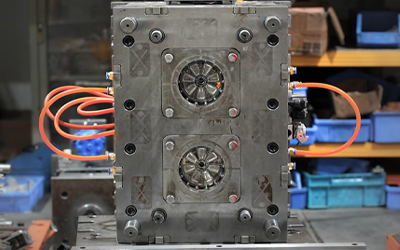
Injection molds are core tools in plastic product manufacturing. They are precision engineering devices used to inject molten plastic under high pressure into a cavity of a specific shape, which then cools and solidifies to form the desired product. As the most important process equipment in the plastics processing industry, the quality and precision of injection molds directly determine the dimensional accuracy, surface quality, and production efficiency of the final product.They are widely used in various industries, including everyday consumer goods, electrical appliances, electronics, toys, automobiles, and military applications.
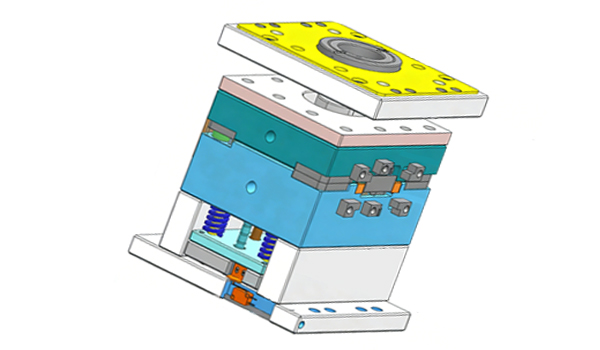
From a technical perspective, an injection mold is a complex mechanical system, typically composed of the following core components:
- Mold base system – The basic structure of the mold, providing support and guidance
- Cavity and core – Precision components that form the product’s shape and internal structure
- Gating system – Channels that guide molten plastic from the injection molding machine nozzle into the cavity
- Ejection system – The mechanism that ejects the product from the mold after molding
- Cooling system – Controls the mold temperature to ensure uniform cooling of the product
- Ventilation system: Expels air from the cavity to prevent product defects
High-quality injection molds, capable of maintaining consistent precision and performance over hundreds of thousands to millions of cycles, are a key asset in the plastics manufacturing industry. Common types of injection molds are mainly divided into:
- Two-Plate Mold
- Three-Plate Mold
- Hot Runner Mold
- Insert mold
- Two-color mold
Our Injection Mold Manufacturing Process
Phase 1: Project Engineering Analysis
- Drawing review and requirements analysis
- DFM analysis
- Technology and solution confirmation
Phase 2: Comprehensive Mold Deisgn
- 3D mold structure design
- Mechanical system design
- Design simulation and verification
Phase 3: Mold Parts Processing
- Material selection and pretreatment
- Rough machining of parts
- Fine machining and surface treatment
Phase 4: Mold Assembly & Debugging
- Core assembly and benchmark calibration
- Motion and ejection system debugging
- Other system integration
Phase 5: Trial and Verification
- First trial molding test
- Product performance verification
- Mold optimization and continuous testing
Phase 6: Mold Delivery & Production
- Customer acceptance and mold transfer
- Mold maintenance and report delivery
- Injection molding mass production services
Make Sure Your Injection Molds are Properly Designed
Given the complexity of injection molds, ensuring they meet specifications is crucial, but design is equally important. There are numerous injection molding companies worldwide, with varying design capabilities. Only companies with years of experience and expertise can guarantee the proper functioning of injection molds and minimize problems in subsequent production.
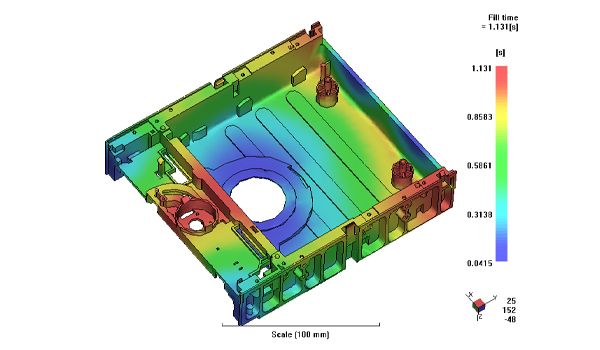
Mold Flow Analysis
We employ advanced Moldflow mold flow analysis technology to comprehensively simulate the flow behavior, temperature distribution, and pressure changes of molten plastic within the mold cavity before mold manufacturing. By accurately predicting filling patterns, cooling efficiency, and potential deformation, our engineers can optimize gate design, cooling channel layout, and venting systems, reducing the number of trial runs and ensuring a yield rate of over 90% on the first trial production run. This data-driven design verification approach not only shortens the development cycle but also fundamentally avoids quality risks during mass production.
Simulation Design Principles
- Uniform and Controllable Plastic Flow Pattern
- Flow Balance - the cavity was filled under the same time and pressure
- Equal Pressure Drop
- Do not exceed the material's allowable shear force range
- Uniform Cooling
- Location of Seam and Weld Lines
- Avoid Hesitation
- Avoid Underflow
- Use Flow Leaders and Flow Deflectors to achieve balanced filling by adjusting the thickness of local areas of the finished product
- Design a reasonable runner/cavity volume ratio.
Make Sure Your Injection Molds are Properly Designed
Given the complexity of injection molds, ensuring they meet specifications is crucial, but design is equally important. There are numerous injection molding companies worldwide, with varying design capabilities. Only companies with years of experience and expertise can guarantee the proper functioning of injection molds and minimize problems in subsequent production.
Mold Flow Analysis
We employ advanced Moldflow mold flow analysis technology to comprehensively simulate the flow behavior, temperature distribution, and pressure changes of molten plastic within the mold cavity before mold manufacturing. By accurately predicting filling patterns, cooling efficiency, and potential deformation, our engineers can optimize gate design, cooling channel layout, and venting systems, reducing the number of trial runs and ensuring a yield rate of over 90% on the first trial production run. This data-driven design verification approach not only shortens the development cycle but also fundamentally avoids quality risks during mass production.
Simulation Design Principles
- Uniform and Controllable Plastic Flow Pattern
- Flow Balance - the cavity was filled under the same time and pressure
- Equal Pressure Drop
- Do not exceed the material's allowable shear force range
- Uniform Cooling
- Location of Seam and Weld Lines
- Avoid Hesitation
- Avoid Underflow
- Use Flow Leaders and Flow Deflectors to achieve balanced filling by adjusting the thickness of local areas of the finished product
- Design a reasonable runner/cavity volume ratio
Why Choose Our Injection Molds?
With 20 years of experience in mold R&D and manufacturing, we have provided customers with over 2,000 high-precision mold solutions. Our core advantage lies in combining cutting-edge mold engineering technology with in-depth industry application knowledge, ensuring that each mold not only meets initial specifications but also consistently produces millions of qualified products, truly reducing your total cost of ownership. When you choose our molds, you gain not just a tool, but a proven production system and worry-free technical support throughout the entire process, enabling your products to stand out in the highly competitive global market.
Comprehensive Mold Technology Capabilities
Deep Cavity Molding Technology
Precision deep cavity mold design with a depth-to-diameter ratio of up to 1:8;Special demolding mechanism to eliminate product stress deformation; Stepped ejection system to ensure complete demolding of deep cavity products; Optimized pressure distribution to prevent collapse of thin-walled deep cavity products.
Precision Thread Demolding System
Non-slip rotary demolding mechanism; Synchronous internal and external thread demolding technology; Tear-resistant solution for thread forming of soft materials.
Advanced Slider Core-Pulling Mechanism
Synchronous core-pulling system, micro-slider precision control, hybrid system of inclined guide post and hydraulic core-pulling
Slider wear-resistant solution for high-temperature environments.
Air-assisted/Water-Sssisted Molding Technology
Microchannel gas control system, water-assisted technology wall thickness uniformity optimization, gas penetration path simulation and optimization, and internal cavity forming post-processing technology
Extensive Industry Experience & Area of Expertise
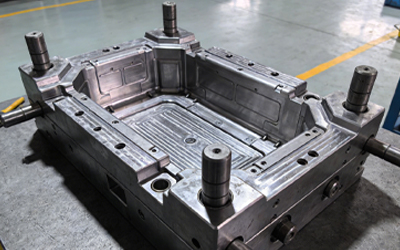
Home Appliance Application
- High-efficiency energy-saving motor molds: Utilizing high-speed progressive die technology and burr-free punching processes, these molds enhance motor energy efficiency and quiet operation.
- Durable housing and component molds: Employing special surface treatment and cooling technologies, combined with a precision slide core-pulling mechanism, these molds ensure high-precision and high-stability molding of complex structural components.
- Smart home appliance electronic component molds: Providing precise embedded component positioning and packaging capabilities, these molds ensure electronic products achieve an IP67 protection rating, effectively resisting water and dust corrosion.
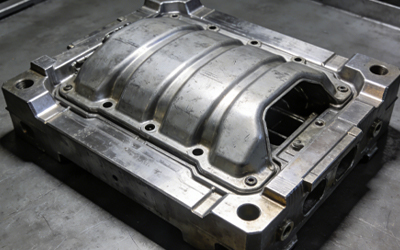
Industrial & Automotive Applications
- Automotive Motor Component Molds: Motor molds specifically developed for hybrid and electric vehicles utilize high-temperature resistant BMC material solutions, achieving an optimal balance between lightweight design and structural strength in the extreme environment of the engine compartment.
- Industrial Equipment Core Component Molds: Industrial equipment core component molds integrate high IP67/68 protection rating design, chemical corrosion-resistant material molding technology, and ultra-long lifespan structures, ensuring continuous and reliable operation in harsh industrial environments.
Electrical & Insulation Components
BMC/DMC Insulation Molds: Utilizing high-temperature, high-pressure deformation compensation technology, optimized venting systems, and surface finish control, we ensure the insulation performance and long-term reliability of electrical components under high-pressure environments.
- Engineering Plastic Electrical Component Molds: Our electrical component molds, developed for high-temperature engineering plastics such as PPS/PEEK, ensure consistent electrical performance and safe operation of complex insulation components in harsh environments through precise glass fiber orientation control and specialized anti-static design.
Advanced Equipment & Independent Production of Key Components
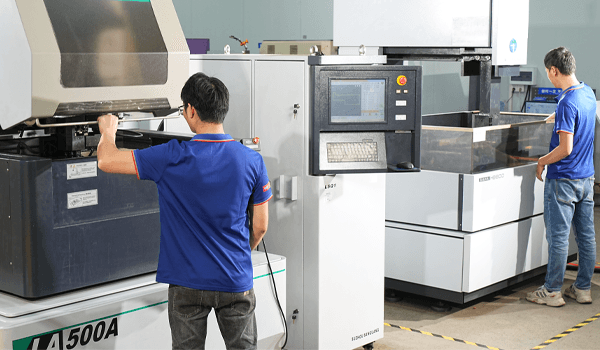
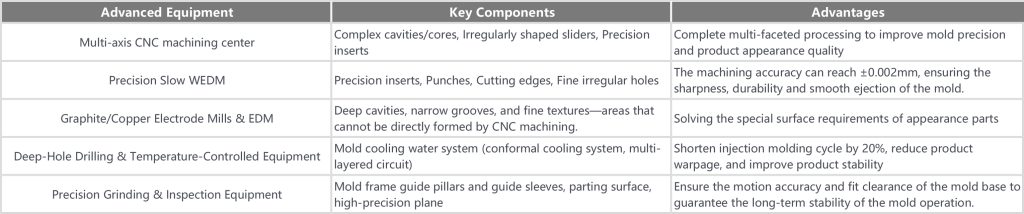
A reliable mold begins with precision parts. We have invested in key production equipment and achieved independent high-precision machining of core components. This not only ensures the controllability of the entire process but also forms a solid foundation for mold performance, lifespan, and delivery speed.
|
Advanced Equipment
|
Key Components
|
Advantages
|
|---|---|---|
|
Multi-axis CNC machining center
|
Complex cavities/cores, Irregularly shaped sliders, Precision inserts
|
Complete multi-faceted processing to improve mold precision and product appearance quality
|
|
Precision Slow WEDM
|
Precision inserts, Punches, Cutting edges, Fine irregular holes
|
The machining accuracy can reach ±0.002mm, ensuring the sharpness, durability and smooth ejection of the mold.
|
|
Graphite/Copper Electrode Mills & EDM
|
Deep cavities, narrow grooves, and fine textures—areas that cannot be directly formed by CNC machining.
|
Solving the special surface requirements of appearance parts
|
|
Deep-Hole Drilling & Temperature-Controlled Equipment
|
Mold cooling water system (conformal cooling system, multi-layered circuit)
|
Shorten injection molding cycle by 20%, reduce product warpage, and improve product stability
|
|
Precision Grinding & Inspection Equipment
|
Mold frame guide pillars and guide sleeves, parting surface, high-precision plane
|
Ensure the motion accuracy and fit clearance of the mold base to guarantee the long-term stability of the mold operation.
|
Why Choose Our Injection Molds?
With 20 years of experience in mold R&D and manufacturing, we have provided customers with over 2,000 high-precision mold solutions. Our core advantage lies in combining cutting-edge mold engineering technology with in-depth industry application knowledge, ensuring that each mold not only meets initial specifications but also consistently produces millions of qualified products, truly reducing your total cost of ownership. When you choose our molds, you gain not just a tool, but a proven production system and worry-free technical support throughout the entire process, enabling your products to stand out in the highly competitive global market.
Comprehensive Mold Technology Capabilities
Deep Cavity Molding Technology
Precision deep cavity mold design with a depth-to-diameter ratio of up to 1:8;Special demolding mechanism to eliminate product stress deformation; Stepped ejection system to ensure complete demolding of deep cavity products; Optimized pressure distribution to prevent collapse of thin-walled deep cavity products.
Precision Thread Demolding System
Non-slip rotary demolding mechanism; Synchronous internal and external thread demolding technology; Tear-resistant solution for thread forming of soft materials.
Advanced Slider Core-Pulling Mechanism
Synchronous core-pulling system, micro-slider precision control, hybrid system of inclined guide post and hydraulic core-pulling
Slider wear-resistant solution for high-temperature environments.
Air-assisted/Water-Sssisted Molding Technology
Microchannel gas control system, water-assisted technology wall thickness uniformity optimization, gas penetration path simulation and optimization, and internal cavity forming post-processing technology
Extensive Industry Experience & Area of Expertise
Home Appliance Application
- High-efficiency energy-saving motor molds: Utilizing high-speed progressive die technology and burr-free punching processes, these molds enhance motor energy efficiency and quiet operation.
- Durable housing and component molds: Employing special surface treatment and cooling technologies, combined with a precision slide core-pulling mechanism, these molds ensure high-precision and high-stability molding of complex structural components.
- Smart home appliance electronic component molds: Providing precise embedded component positioning and packaging capabilities, these molds ensure electronic products achieve an IP67 protection rating, effectively resisting water and dust corrosion.
Industrial & Automotive Applications
- Automotive Motor Component Molds: Motor molds specifically developed for hybrid and electric vehicles utilize high-temperature resistant BMC material solutions, achieving an optimal balance between lightweight design and structural strength in the extreme environment of the engine compartment.
- Industrial Equipment Core Component Molds: Industrial equipment core component molds integrate high IP67/68 protection rating design, chemical corrosion-resistant material molding technology, and ultra-long lifespan structures, ensuring continuous and reliable operation in harsh industrial environments.
Electrical & Insulation Components
BMC/DMC Insulation Molds: Utilizing high-temperature, high-pressure deformation compensation technology, optimized venting systems, and surface finish control, we ensure the insulation performance and long-term reliability of electrical components under high-pressure environments.
- Engineering Plastic Electrical Component Molds: Our electrical component molds, developed for high-temperature engineering plastics such as PPS/PEEK, ensure consistent electrical performance and safe operation of complex insulation components in harsh environments through precise glass fiber orientation control and specialized anti-static design.
Advanced Equipment & Independent Production of Key Components
A reliable mold begins with precision parts. We have invested in key production equipment and achieved independent high-precision machining of core components. This not only ensures the controllability of the entire process but also forms a solid foundation for mold performance, lifespan, and delivery speed.
Are These Challenges Holding Back Your Injection Molding Production?
The value of a good mold ultimately lies in stable and efficient production. Below is our analysis of common injection molding defects, which often correspond to specific flaws in mold design or manufacturing.Simply adjusting the injection molding process after problems arise is often counterproductive. The real solution lies in precise preventative design from the very beginning of mold making.
Stubborn shrinkage marks and dents
Impact: Poor product appearance, weak structural strength, even process adjustments are ineffective
Persistent flash and burrs
Impact:Increased secondary trimming costs, mold damage, and even downtime
Fixed weld lines and trapped air
Impact: Product appearance defects and structural weak points, prone to breakage
Uncontrollable warping and dimensional deviations
Impact: Difficult assembly, high product scrap rate, poor mass production consistency
Troublesome ejection marks and scratches
Impact: Product surface damage, automated production interruption
Periodic spots or uneven surface gloss
Impact: Causes serious defects in product appearance and batch-to-batch quality inconsistencies
How can you verify if your injection mold is truly of high quality? Click to view the “Injection Mold Customization Guide“
Partner with Us. Engineer Your Success.
- Obtain a targeted "Preliminary Feasibility Assessment for Mold"
- One-on-one Contact with Mold Engineers
- Get A Quote for Custom Injection Molds

- No.2, South Huatai East Road, Caosan PioneerPark,ZhongShan,Guangdong,China
- +86 13326981626
- ocean.h@wanglai.cn
CAPABILITIES




Copyright ©2025 Wontech | Powered by Wontech.All Rights Reserved.