
Plastic Solutions for Your Demanding Parts
Failure of plastic parts often stems from a mismatch between materials and the application environment. When faced with high temperatures, high humidity, chemical corrosion, long-term loads, or extreme insulation requirements, simple material catalog selection is far from sufficient. We not only select materials for you, but also use testing and modification methods to adapt material solutions to meet your specific requirements.
Plastic Innovation Is Changing The Industry
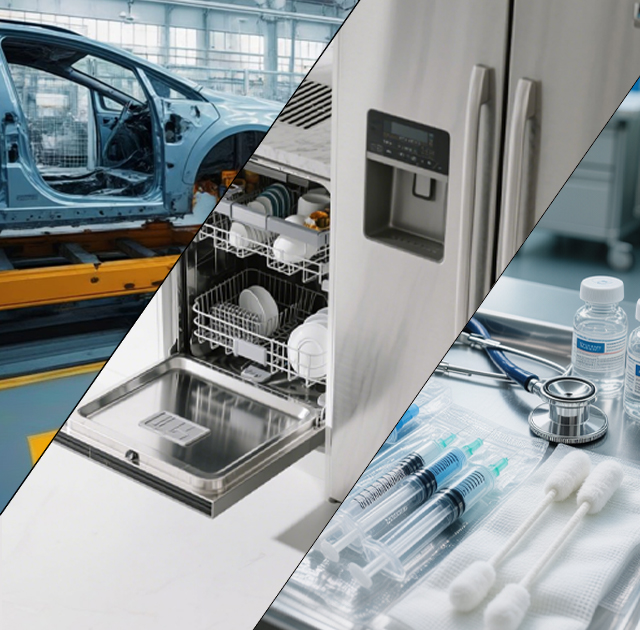
Automotive Lightweighting and Electrification
Cases:Battery module endplates and brackets,Electric water pumps,Sensor housings,Integrated lightweight seat frames,Large panoramic sunroof brackets
Solution:By customizing material properties through technologies such as long glass fiber reinforcement and special modification, and combining CAE simulation analysis with precision injection molding processes, we ensure that components meet the most stringent mechanical, thermal, and chemical performance requirements while achieving optimal cost and lightweight objectives.
Medical Equipment
Cases:Precision components of blood analyzers, handles and housings of surgical instruments, and core components of drug delivery devices
Solution:To meet medical compliance and functional reliability requirements, we select materials from a medical-grade material library that complies with ISO13485/FDA standards, and implement full-process traceable quality management to ensure that every component, from performance to documentation, supports customers in completing rigorous registration and approval processes.
Home Appliance Industry Components
Cases:Refrigerator door seals, washing machine inner drum balance rings, air conditioner air guide vanes, rice cooker outer shells, blender cups and transmission structures, smart door lock shells, and water purifier filter housings.
Solution:By carefully selecting custom-made, weather-resistant and chemical-resistant materials, combined with rigorous CAE structural analysis and precision manufacturing processes, we ensure that components maintain functional stability and safety compliance in harsh environments over long periods, thus contributing to the optimization of overall machine energy efficiency.
Plastic Innovation Is Changing The Industry
Automotive Lightweighting and Electrification
Cases:Battery module endplates and brackets,Electric water pumps,Sensor housings,Integrated lightweight seat frames,Large panoramic sunroof brackets
Solution:By customizing material properties through technologies such as long glass fiber reinforcement and special modification, and combining CAE simulation analysis with precision injection molding processes, we ensure that components meet the most stringent mechanical, thermal, and chemical performance requirements while achieving optimal cost and lightweight objectives.
Medical Equipment
Cases:Precision components of blood analyzers, handles and housings of surgical instruments, and core components of drug delivery devices
Solution:To meet medical compliance and functional reliability requirements, we select materials from a medical-grade material library that complies with ISO13485/FDA standards, and implement full-process traceable quality management to ensure that every component, from performance to documentation, supports customers in completing rigorous registration and approval processes.
Home Appliance Industry Components
Cases:Refrigerator door seals, washing machine inner drum balance rings, air conditioner air guide vanes, blender cups and transmission structures, smart door lock shells.
Solution:By carefully selecting custom-made, weather-resistant and chemical-resistant materials, combined with rigorous CAE structural analysis and precision manufacturing processes, we ensure that components maintain functional stability and safety compliance in harsh environments over long periods, thus contributing to the optimization of overall machine energy efficiency.
Core Performance Challenges & Breakthroughs
Every industry faces unique performance challenges that push the performance of plastic components to traditional limits. For 20 years, we have been dedicated to overcoming seemingly impossible requirements—transforming high-failure-rate metal components into reliable plastic solutions, and creating components that can operate stably in extreme chemical environments.
Replacing Steel With Plastic
Engineering Plastic Components for Heavy-Duty Applications
Challenges for Metal Parts In Harsh Environments
- High weight leads to high energy consumption
- Corrosion risk shortens lifespan
- Assembly of multiple components increases costs
- Vibration and noise affect performance
Our Solution Includes
- Long glass fiber reinforced PPA material (40-50% fiber content)
- Integrated structural design eliminates connection points
- Finite element analysis optimizes stress distribution
- Special surface treatment enhances wear resistance
Real-world Application Results
- Industrial gear systems: 52% weight reduction, 18dB noise reduction
- Drone landing gear: 35% increased shock resistance, 40% reduction in unit cost
- Maintenance-free period extended to 3 years (compared to 6 months for metal parts)
Coping With Extreme Chemical Environments
Chemical resistance: Durable plastic solutions for harsh environments
Typical failure cases in extreme chemical environments
- Metal valves corrode and fail after 6 months in acidic media
- Ordinary plastic rollers swell and deform after 3 weeks in organic solvents
- Seals rapidly age and leak in strongly alkaline environments
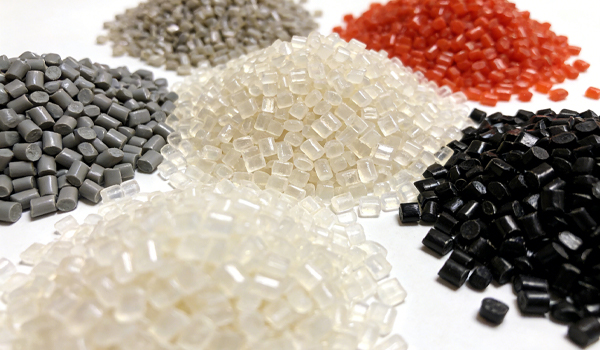
Precise matching of materials and chemical environments
- PVDF: Resistant to strong acids/halogens (suitable for pH 0-14)
- PPS: Resistant to organic solvents/high-temperature vapor
- PTFE lining: The ultimate solution for preventing seepage
- Custom formulation: For specific chemical mixtures
Structural protection beyond materials
- Dual-Sealing System Design
- Thickness Gradient Optimization to Prevent Stress Cracking
- Self-Draining Structure to Prevent Chemical Accumulation
- Quick-Change Module Design
|
Quick Material Guide for Harsh Chemical Environments
|
||||||
|---|---|---|---|---|---|---|
|
Material
|
Resistance Level
|
Best For
|
||||
|
Strong Acids
|
Strong Bases
|
Organic Solvents
|
Oxidizers
|
Salt Solutions
|
||
|
PVDF
|
⭐⭐⭐
|
⭐⭐⭐
|
⭐⭐
|
⭐⭐⭐
|
⭐⭐⭐
|
Chemical valves, Pumps, Semiconductor parts
|
|
PPS
|
⭐⭐
|
⭐⭐⭐
|
⭐⭐⭐
|
⭐⭐
|
⭐⭐⭐
|
Seals, Gaskets, Critical fluid handling
|
|
PTFE
|
⭐⭐⭐
|
⭐⭐⭐
|
⭐⭐⭐
|
⭐⭐⭐
|
⭐⭐⭐
|
Electrical connectors, Automotive sensors
|
|
PPA
|
⭐⭐
|
⭐⭐
|
⭐
|
⭐⭐
|
⭐⭐⭐
|
Coolant systems, Under-hood automotive
|
|
Standard Nylon
|
×
|
×
|
×
|
⭐
|
⭐⭐
|
Reference material- not for harsh environments
|
 Excellent: Long-term exposure Good:Limited exposure Fair:Short-term only ×Poor: Not recommended
Note: Actual performance depends on concentration,temperature, and exposure time. Request a free compatibility test for your specific application.
High Dimensional Stability And Low Creep
Micron-Level Precision: Plastic Parts That Stay Dimensionally Perfect Over Time
Why micrometer-level stability is crucial?
- Optical equipment: 0.01mm deformation = 30% image distortion
- Measuring instruments: Dimensional drift = cumulative reading error
- Microfluidic chips: Channel variation = fluid control failure
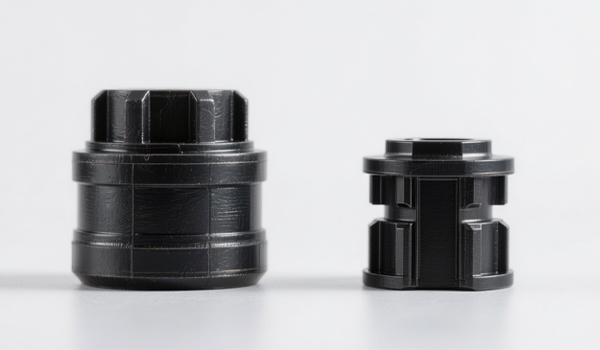
3 steps Technology Implementation Path
Plastics Science
- LCP (Liquid Crystal Polymer): 0.02% creep rate
- Mineral-filled PPS: Thermal expansion coefficient close to that of metals
Process Control
- Precise temperature profile annealing
- Stress-relieving vacuum environment treatment
Validation System
- -40°C to +150°C thermal cycling test
- 10,000-hour accelerated aging validation
- Real-time size monitoring system
Core Performance Challenges & Breakthroughs
Every industry faces unique performance challenges that push the performance of plastic components to traditional limits. For 20 years, we have been dedicated to overcoming seemingly impossible requirements—transforming high-failure-rate metal components into reliable plastic solutions, and creating components that can operate stably in extreme chemical environments.
Replacing Steel With Plastic
Engineering Plastic Components for Heavy-Duty Applications
Challenges for Metal Parts In Harsh Environments
- High weight leads to high energy consumption
- Corrosion risk shortens lifespan
- Assembly of multiple components increases costs
- Vibration and noise affect performance
Our Solution Includes
- Long glass fiber reinforced PPA material (40-50% fiber content)
- Integrated structural design eliminates connection points
- Finite element analysis optimizes stress distribution
- Special surface treatment enhances wear resistance
Real-world Application Results
- Industrial gear systems: 52% weight reduction, 18dB noise reduction
- Drone landing gear: 35% increased shock resistance, 40% reduction in unit cost
- Maintenance-free period extended to 3 years (compared to 6 months for metal parts)
Coping With Extreme Chemical Environments
Chemical resistance: Durable plastic solutions for harsh environments
Typical failure cases in extreme chemical environments
- Metal valves corrode and fail after 6 months in acidic media
- Ordinary plastic rollers swell and deform after 3 weeks in organic solvents
- Seals rapidly age and leak in strongly alkaline environments
Precise matching of materials and chemical environments
- PVDF: Resistant to strong acids/halogens (suitable for pH 0-14)
- PPS: Resistant to organic solvents/high-temperature vapor
- PTFE lining: The ultimate solution for preventing seepage
- Custom formulation: For specific chemical mixtures
Structural protection beyond materials
- Dual-Sealing System Design
- Thickness Gradient Optimization to Prevent Stress Cracking
- Self-Draining Structure to Prevent Chemical Accumulation
- Quick-Change Module Design
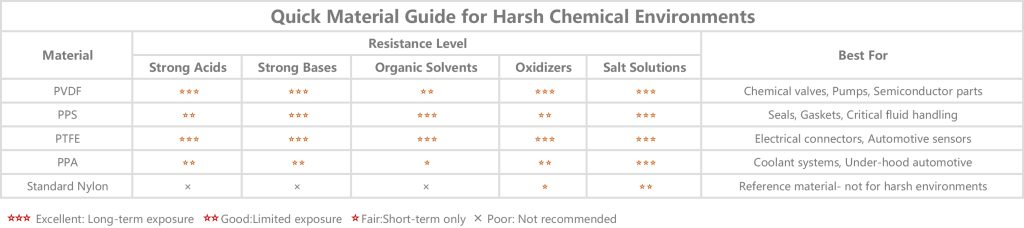
Note: Actual performance depends on concentration,temperature, and exposure time. Request a free compatibility test for your specific application.
High Dimensional Stability And Low Creep
Micron-Level Precision: Plastic Parts That Stay Dimensionally Perfect Over Time
Why micrometer-level stability is crucial?
- Optical equipment: 0.01mm deformation = 30% image distortion
- Measuring instruments: Dimensional drift = cumulative reading error
- Microfluidic chips: Channel variation = fluid control failure
3 steps Technology Implementation Path
Plastics Science
- LCP (Liquid Crystal Polymer): 0.02% creep rate
- Mineral-filled PPS: Thermal expansion coefficient close to that of metals
Process Control
- Precise temperature profile annealing
- Stress-relieving vacuum environment treatment
Validation System
- -40°C to +150°C thermal cycling test
- 10,000-hour accelerated aging validation
- Real-time size monitoring system
Materials Certification and Compliance Solutions
Global Food Contact Safety
Key Certifications: FDACFR21,EU 10/2011,GB 4806
Main Applications: Kitchen appliances, Householdappliances, Food packaging.
Requirements: Ensures material safety and prevents the migrationof harmful substances.
Medical and Health Safety
Key Certifications: ISO 10993 (Biocompatibility), USP Class VI (Pharmacopoeia)
Main Applications: Medical devices, in vitro diagnostic equipment.
Requirements: Assessing the safety of materials in contact with the human body.
Electrical and Electronic Safety
Key Certifications: UL 94 (flame retardant rating), UL 746, IEC 62368
Main Applications: Household appliances, Consumer electronics housing and internal components.
Requirements: Especially for components requiring flame retardancy, heat resistance, and arc resistance.
Automotive and Aerospace Specific Performance
Key Certifications: ISO/TS 16949 (Automotive Quality System), Airbus/Boeing Material
Main Applications: Specifications for automotive interior/exterior parts and aerospace interior parts.
Requirements: Meets stringent requirements for heat resistance, flame retardancy, and low volatile organic compounds (VOCs).
Environmental and Sustainable Development
Key Certifications: RoHS, REACH SVHC (Restriction of Hazardous Substances)
Main Applications: For all exports to the EU and industries focused on environmental protection.
Requirements: Control of specific chemical substances; support for green procurement.
Materials Environmental Characteristics
Key Certifications: TÜV certifications such as “Recyclability” and “Bio-based,” and EPD
Main Applications: For all industries that prioritize green marketing and supply chain sustainability.
Requirements: Objectively verifies the recyclability and bio-based content of materials.
Some Successful Customized Solution Cases
Many engineers often find that standard plastic materials cannot meet their needs when faced with extreme temperatures, strong corrosion, or special performance requirements. We have developed customized material solutions for over 300 clients to help you push the limits of your designs.
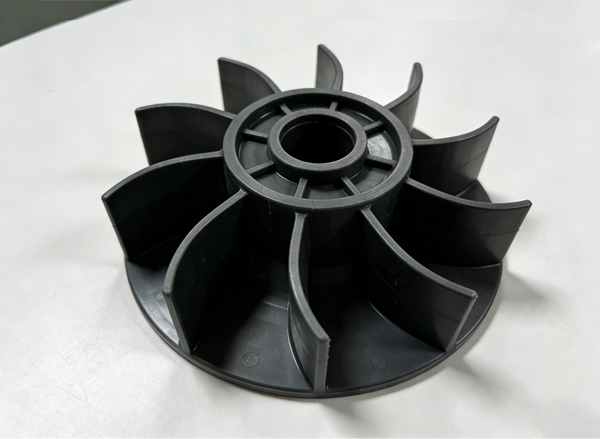
Client Challenges
The water pump impeller cracked after 6 months in high-temperature antifreeze; standard PPA material could not withstand long-term thermal shock.
Customized Solutions
PPA + 25% glass fiber + special hydrolysis-resistant additives. Optimized for repeated thermal cycling from -40°C to 135°C.Added hydrolysis-resistant agents improve long-term stability.
Actual Results
Bench test lifespan extended to 5+ years.
Unit cost increased by only 18%, but warranty cost reduced by 76%.
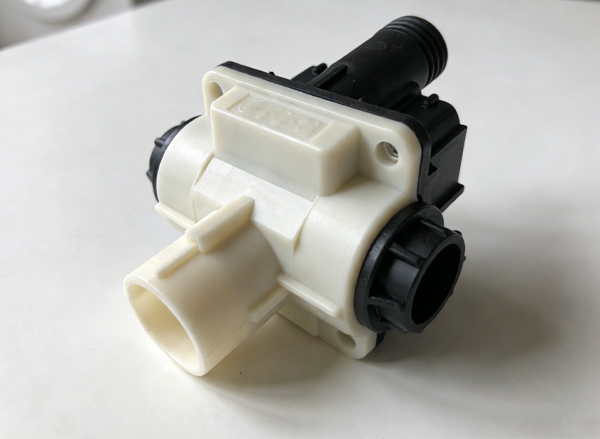
Client Challenges
High-end washing machine drain valves must withstand 95°C hot water and detergent corrosion; traditional ABS materials deform and leak within 2 yrs.
Customized Solutions
PPS + 15% mineral filler + special lubricant formula.Optimized flow performance adapts to complex valve body structures.Built-in lubrication reduces opening and closing friction.
Actual Results
Product lifespan increased to 8+ years.
Annual savings of 37% on after-sales maintenance costs.
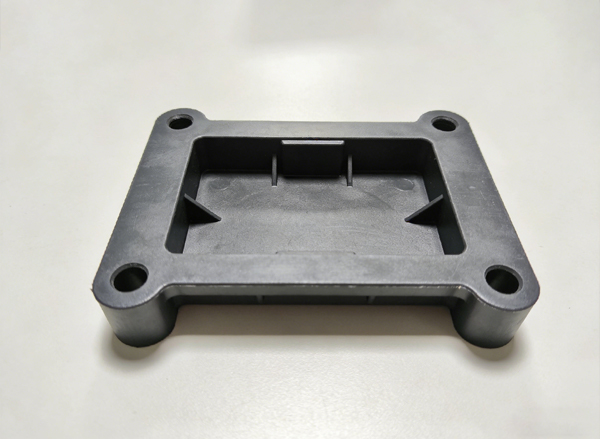
Client Challenges
The insulation performance of industrial motor end plates deteriorates under high temperature and humidity environments, and standard glass fiber nylon cannot meet the IE4 energy efficiency requirements.
Customized Solutions
PET + 30% Glass Fiber + High-Purity Insulating Filler + Anti-Corona Coating.180°C Heat Deflection Temperature.Volume Resistivity > 10^16 Ω·cm.Optimized for High-Frequency PWM Drive.
Actual Results
Motor efficiency improved to IE4+ standard.
Failure rate reduced to 0.2%.
Customize The Right Plastic For Your Parts
4 Step Customization Process: 01.Requirements Analysis → 02.Formulation Development → 03.Verification Testing → 04.Mass Production Support
Partner with Us. Engineer Your Success.
When standard material solutions cannot meet your extreme operating conditions
our [custom material formulation service] can provide you with a customized solution.

- No.2, South Huatai East Road, Caosan PioneerPark,ZhongShan,Guangdong,China
- +86 13326981626
- ocean.h@wanglai.cn
CAPABILITIES




Copyright ©2025 Wontech | Powered by Wontech.All Rights Reserved.